← Science

Year 8 science: recap

Every idea from Year 8 science in one place, for after you've done the year (or part of it). Answer each question in your head or on paper first, then check it. Nothing here is marked. If one is shaky, open the lesson and go over it again.

Getting ready for Year 8? Start with the Year 7 recap.

Year 8 Chemistry

What are particles made of?

Try firstWhat makes gold a different element from silver?

Check your answer

Gold is made of a different type of atom from silver. Atom type decides the element.

The particles in the particle model are atoms, or atoms joined together. Atoms come in about 118 types, one for each element.

  • All atoms of one element are the same type.
  • Atom type decides what element a substance is.
  • An element can be single atoms (helium) or atoms of one type joined (oxygen, O₂).
Revision summary
  • The particles in the particle model are atoms (or atoms joined together).
  • There are about 118 types of atom, one for each element.
  • All atoms of one element are the same type. Atom type decides the element.
  • An element can be single atoms (helium) or atoms of one type joined (oxygen, O₂).
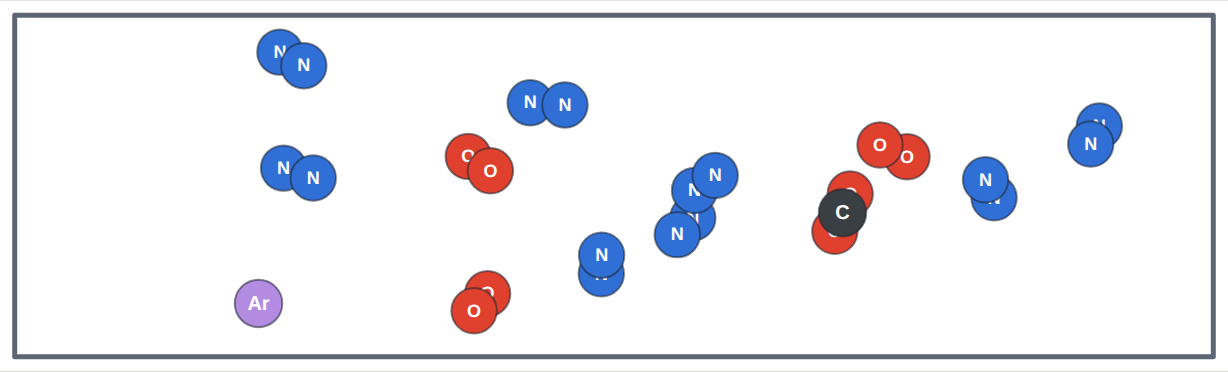
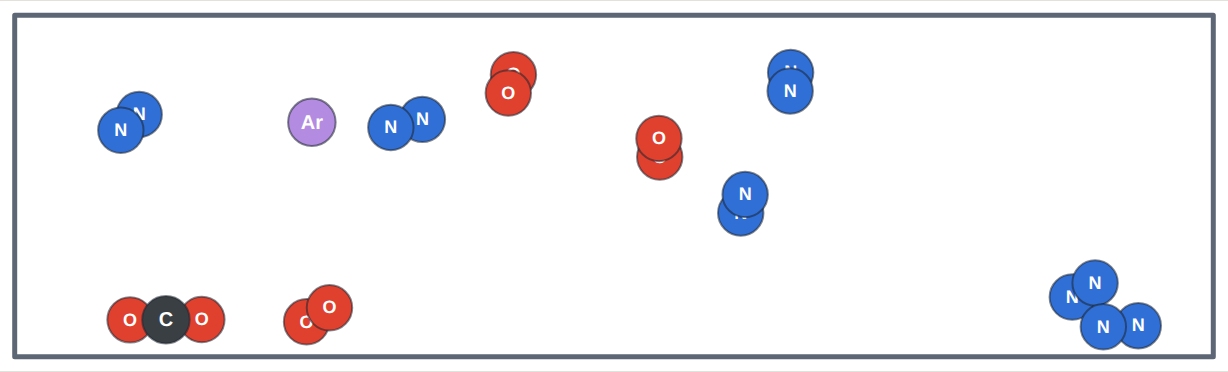
Air zoomed in: nitrogen and oxygen molecules (two atoms each), a single argon atom and carbon dioxide.
Atoms and elements · Sound on for the voiceover
Open the lesson →

What is an element?

Try firstNitrogen gas is N₂ and ammonia is NH₃. Which is an element, and how can you tell from the formula?

Check your answer

Nitrogen: only one symbol (N), so one type of atom. Ammonia has two symbols (N and H): a compound.

An element is a pure substance made of only one type of atom. Its particles can be single atoms (helium, He) or atoms joined together (oxygen, O₂), as long as every atom is the same type.

Each element has a symbol: a capital letter, or a capital and a small letter (Co is cobalt; CO is carbon monoxide, a compound). The periodic table lists them all.

Revision summary
  • An element is a pure substance made of only one type of atom. Its particles can be single atoms (He) or atoms joined together (O₂, O₃).
  • A compound has two or more types of atom joined (H₂O, CO₂).
  • Each element has a symbol: one capital letter, or a capital and a small letter (C, Co, Na). Some come from Latin names (Fe, Na, Cu, Au).
  • The periodic table lists all the elements, about 118.
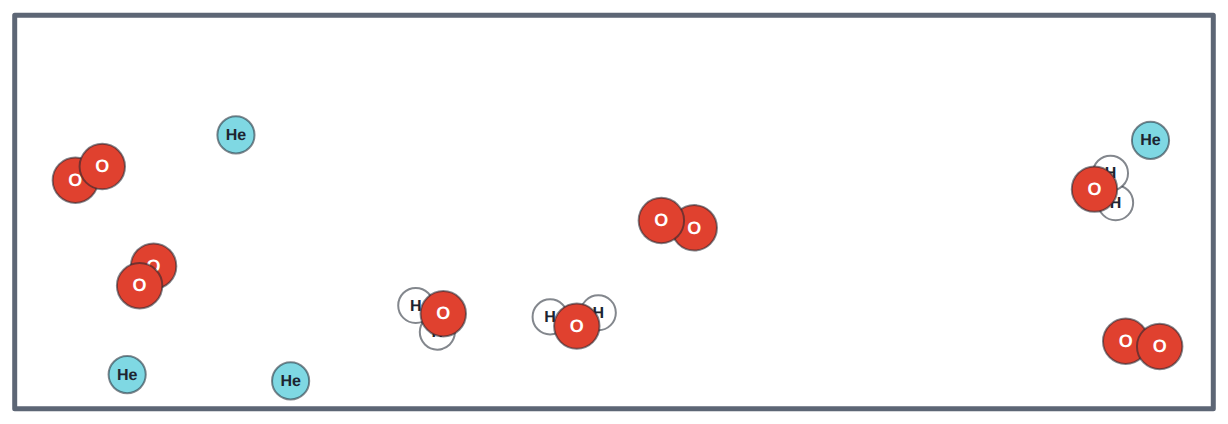
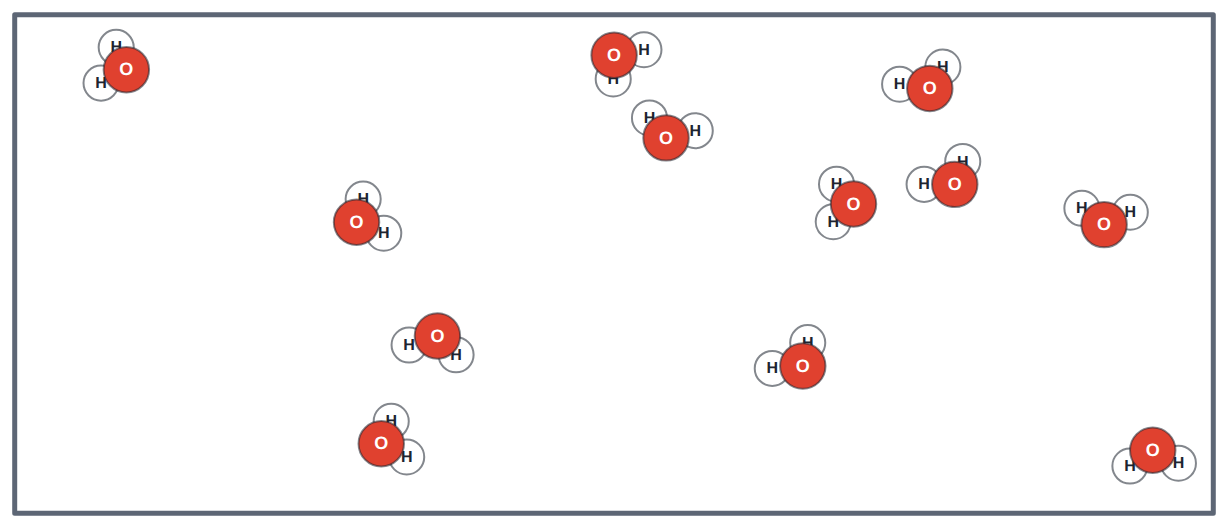
Oxygen (O₂) and helium (He): one type of atom each, so elements. Water (H₂O) has two types: a compound.
Elements · Sound on for the voiceover
Open the lesson →

Why isn't salt poisonous?

Try firstIs carbon dioxide (CO₂) an element, a compound or a mixture? Why?

Check your answer

A compound: carbon and oxygen atoms are chemically joined in a fixed ratio, 1 carbon to 2 oxygen.

A compound is two or more types of atom chemically joined in a fixed ratio. It is a new substance with new properties.

  • A mixture has substances together but not joined; each keeps its properties.
  • A formula lists the atoms in one particle: H₂O has 2 hydrogen and 1 oxygen.
Revision summary
  • A compound is two or more types of atom chemically joined in a fixed ratio.
  • A compound is a new substance with new properties (sodium chloride is not like sodium or chlorine).
  • In a mixture, substances are together but not joined, and each keeps its properties.
  • A formula gives the atoms in one particle: H₂O is 2 hydrogen and 1 oxygen.
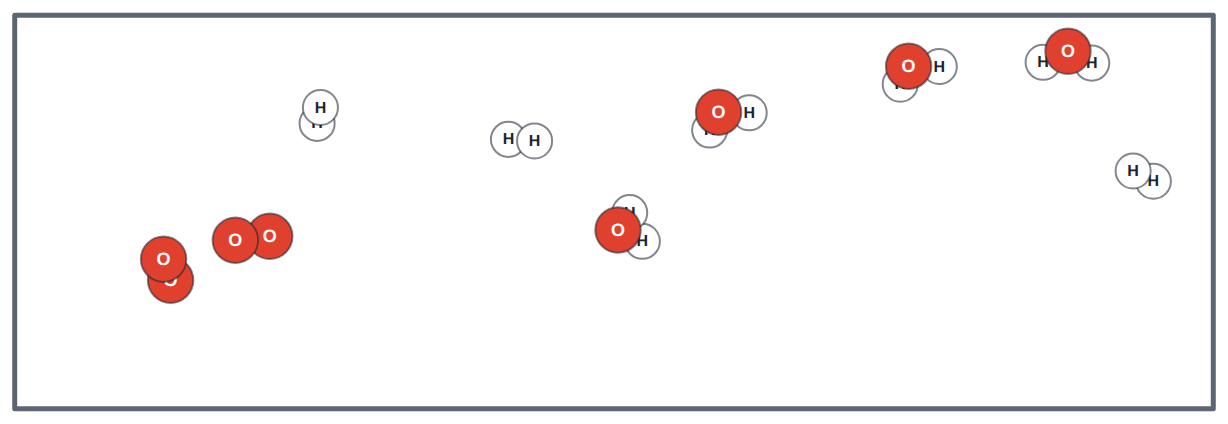
Hydrogen and oxygen (elements: one type of atom each) mixed with water (a compound: H₂O, always two H to one O).
Elements and compounds · Sound on for the voiceover
Open the lesson →

Mixed, not joined?

Try firstIron and sulfur are mixed, then heated to make iron sulfide. Which is the mixture and which the compound, and how could you tell with a magnet?

Check your answer

Before heating: a mixture (a magnet pulls out the iron). After: iron sulfide, a compound (the iron is joined to sulfur, so a magnet can't pull it out).

A mixture is two or more substances mingled together but not chemically joined. Each keeps its own properties, the amounts can vary, and the parts can be separated by physical means.

A compound has different atoms joined in a fixed ratio, with new properties. Air and salt water are mixtures; water and carbon dioxide are compounds.

Revision summary
  • A mixture is two or more substances mingled together but not chemically joined. Each keeps its own particles and properties.
  • A mixture's parts can be in any amounts; a compound always has a fixed ratio (H₂O).
  • Mixtures can be separated by physical means (filtering, evaporating, distilling); compounds only by chemical reactions.
  • Air and salt water are mixtures; water and carbon dioxide are compounds.
Air: nitrogen, oxygen, argon and carbon dioxide particles mixed together, not joined. A mixture.
Mixtures · Sound on for the voiceover
Open the lesson →

Symbols, formulas or models?

Try firstHow many atoms of each element are in 2NH₃?

Check your answer

2 nitrogen and 6 hydrogen (each NH₃ has 1 N and 3 H, and there are 2 particles).

A symbol names an element; a formula (H₂O) gives the types of atom and how many of each; a structural formula shows which atoms are joined; a model shows the shape.

The small number counts the atom just before it; a big number in front counts particles. Each representation shows something the others don't.

Revision summary
  • A symbol (O, Na) names an element.
  • A formula (H₂O, CO₂) gives the types of atom and how many of each. The small number counts the atom before it; a big number in front counts particles (3CO₂).
  • A structural formula shows which atoms are joined; a 3D model shows the shape; a particle diagram shows elements, compounds and mixtures.
  • No single representation shows everything: choose the one that suits the job.
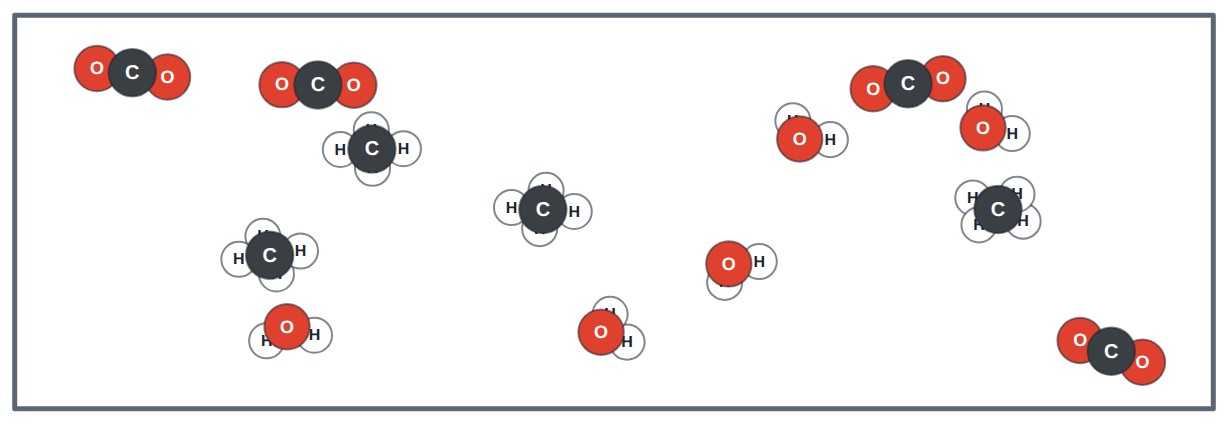
Water (H₂O), carbon dioxide (CO₂) and methane (CH₄) as ball models: each formula tells you which atoms, and how many.
Representations · Sound on for the voiceover
Open the lesson →

Same particles, new look?

Try firstWax melts on a candle and drips. Use particles to explain why this is a physical change.

Check your answer

The wax particles move from fixed positions to sliding past each other, but each particle is still wax: no new substance, so physical.

In a physical change (melting, boiling, dissolving) the particles change how they are arranged, how far apart they are and how fast they move. Every particle stays the same, so no new substance is made.

Steam is still water particles; dissolved salt is still salt. The number of particles, and so the mass, stays the same.

Revision summary
  • In a physical change (melting, freezing, boiling, condensing, dissolving, cutting) the particles change how they are arranged, how far apart they are and how fast they move.
  • The particles themselves stay the same, so no new substance is made. Steam is still water; dissolved salt is still salt.
  • The number of particles stays the same, so the mass stays the same.
  • Next lesson: a chemical change, where atoms rearrange into new particles.
Steam: the same water particles (H₂O) as ice and liquid water, just moving fast and far apart.
Physical change · Sound on for the voiceover
Open the lesson →

Is it a new substance?

Try firstIs rusting physical or chemical? How do you know?

Check your answer

Chemical: rust (iron oxide) is a new substance with different properties from iron.

A chemical change makes a new substance: the atoms separate and join into new particles. A physical change keeps the same particles; only their arrangement or spacing changes.

The test is "is there a new substance?". "Can it be reversed?" is only a clue: dissolving salt can be reversed and is physical.

Revision summary
  • A chemical change makes a new substance: atoms separate and join into new particles.
  • A physical change (melting, boiling, dissolving) keeps the same particles.
  • "Is there a new substance?" is the test. "Can it be reversed?" is only a clue: dissolving can be reversed and is physical.
  • In a chemical change no atoms are made or destroyed; they are rearranged.
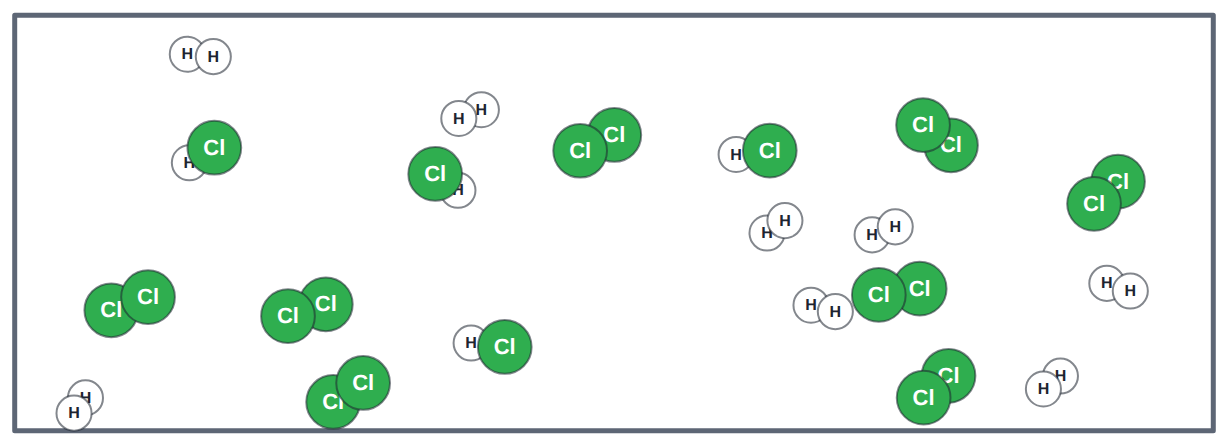
Hydrogen and chlorine molecules: when they collide hard enough, the atoms rearrange into hydrogen chloride.
Chemical change · Sound on for the voiceover
Open the lesson →

How can you tell a reaction happened?

Try firstBicarb and vinegar fizz and the mixture gets colder. Name two signs of a chemical change, and say what would prove it.

Check your answer

Gas given off (fizzing) and a temperature change. A new substance would prove it (carbon dioxide, which turns limewater cloudy).

Signs of a chemical change: a colour change, a gas given off, a solid forming in a liquid (a precipitate), light, a smell, or a temperature change.

Each is a clue, not proof: boiling water bubbles with no new substance. The test is whether a new substance formed.

Revision summary
  • Signs of a chemical change: a colour change, a gas given off, a precipitate, light, a smell, a temperature change.
  • Each sign is a clue, not proof: boiling water bubbles and paint mixing changes colour, with no new substance.
  • The test is whether a new substance formed, with new properties.
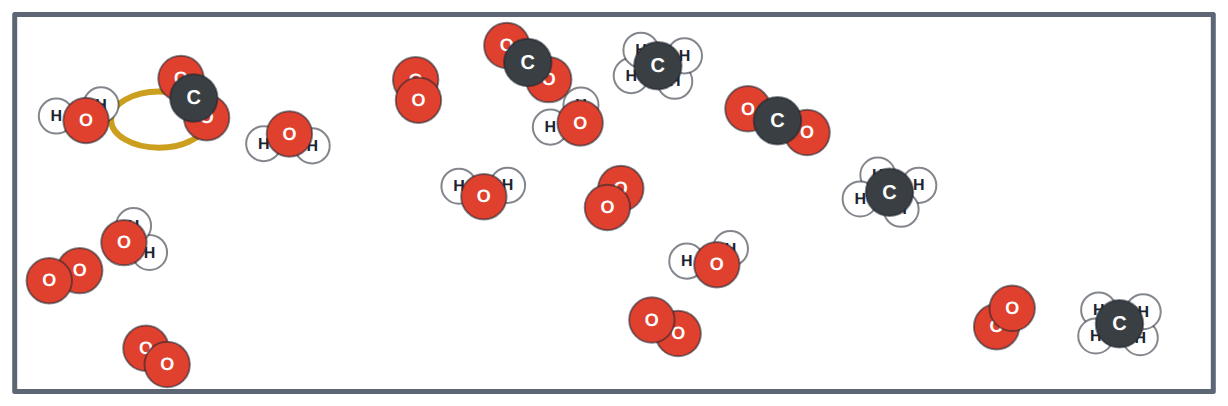
Methane and oxygen reacting. The signs you could observe: a gas given off, heat and light.
Signs of a chemical change · Sound on for the voiceover
Open the lesson →

Hotter or colder?

Try firstBurning candle wax: exothermic or endothermic? Explain using the word surroundings.

Check your answer

Exothermic: the reaction gives out energy to the surroundings, which get hotter (and light is given out).

Exothermic reactions give out energy to their surroundings, which get hotter: burning, respiration, hand warmers.

Endothermic reactions take in energy from their surroundings, which get colder: citric acid and bicarb soda, photosynthesis. Energy moves; it is never made or destroyed.

Revision summary
  • Exothermic reactions give out energy to their surroundings, so the surroundings get hotter: burning, respiration, hand warmers.
  • Endothermic reactions take in energy from their surroundings, so the surroundings get colder: citric acid and bicarb soda, photosynthesis, bicarb and vinegar.
  • Energy is never made or destroyed; it moves between the reaction and its surroundings.
  • There is no "cold energy": colder means less thermal energy.
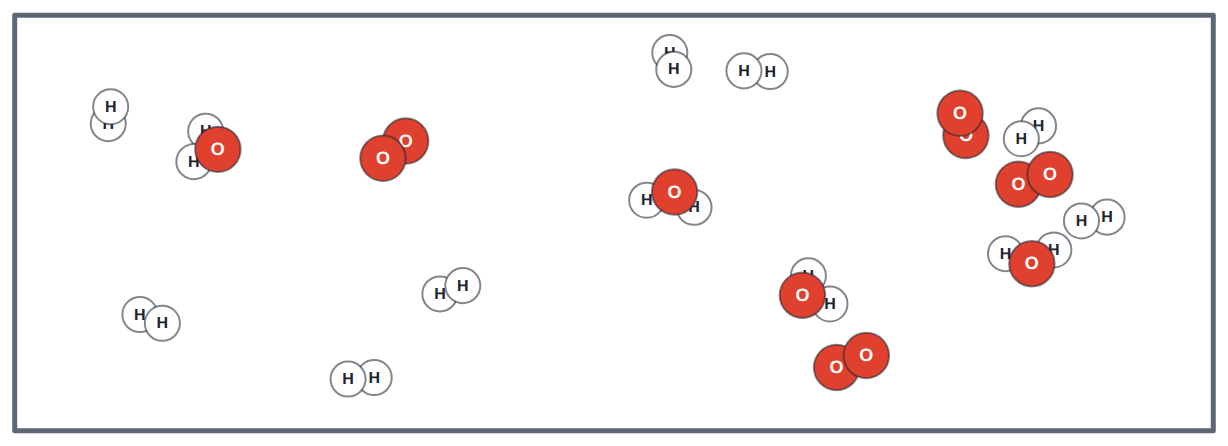
Hydrogen and oxygen reacting: each reaction gives out energy, so the particles speed up and the temperature rises. Exothermic.
Exothermic and endothermic · Sound on for the voiceover
Open the lesson →

Physical or chemical? Use all the clues

Try firstA student says 'it fizzed, so it was chemical'. Give one case where fizzing is not chemical and say what to check instead.

Check your answer

Boiling water fizzes with steam, a physical change. Check whether a new substance was made.

Ask first: is a new substance made? Then use the clues, and remember that one clue can mislead. Several clues pointing the same way give more confidence.

Revision summary
  • First ask: is a new substance made? That is what makes a change chemical.
  • The clues (colour, gas, solid, light, temperature or energy change) support the answer, but one clue can mislead.
  • Several clues pointing the same way give more confidence.
  • Real processes, such as cooking, often include both physical and chemical changes.
Open the lesson →

Year 8 Biology

How small is a cell?

Try firstWhy couldn't anyone in 1500 have known that plants are made of cells?

Check your answer

Cells are smaller than the eye can see (about 0.01 to 0.1 mm), and microscopes strong enough to magnify them hadn't been invented.

Most cells are about 0.01 to 0.1 mm across, smaller than the eye can see (about 0.1 mm). Your body has about 37 trillion of them.

A microscope magnifies: a cell 0.02 mm wide magnified 400 times looks 8 mm wide. Cells were discovered only once microscopes were invented, in the 1600s.

Revision summary
  • Most cells are about 0.01 to 0.1 mm across; bacteria are smaller still. The eye can't see anything smaller than about 0.1 mm.
  • Your body has about 37 trillion cells.
  • A microscope magnifies: a cell 0.02 mm wide magnified 400 times looks 8 mm wide.
  • Cells were discovered only when microscopes were invented (Hooke, 1665; Leeuwenhoek soon after).
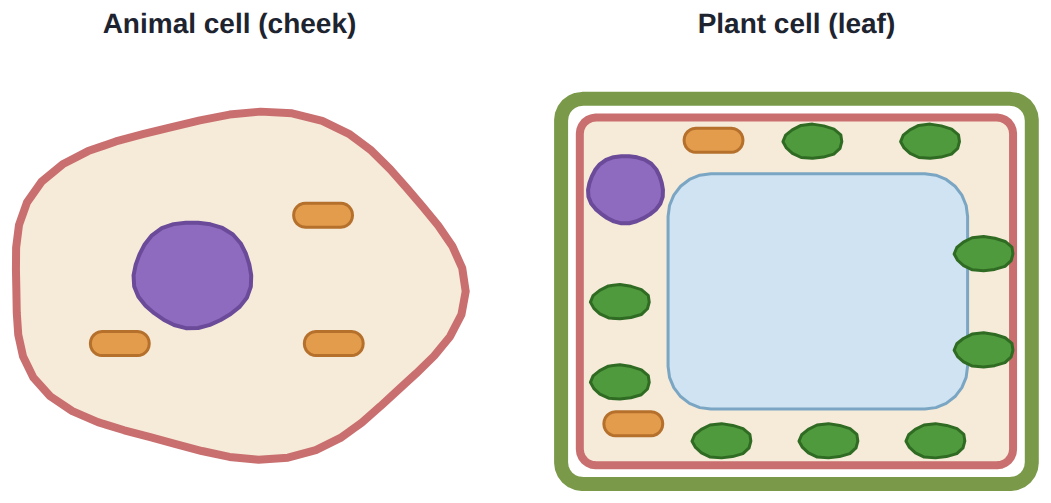
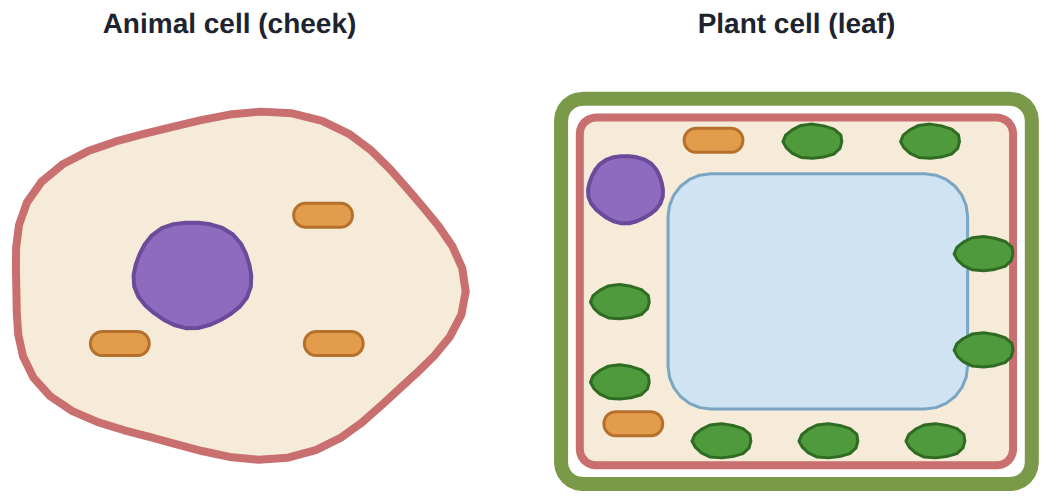
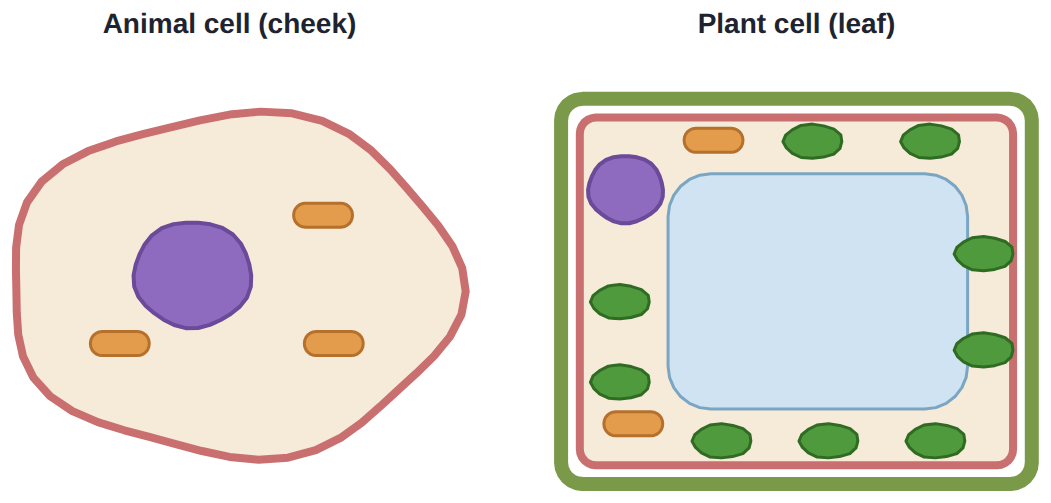
An animal cell and a plant cell, drawn about 1000 times bigger than life. Real ones are about 0.02 to 0.1 mm across.
Cellular scale · Sound on for the voiceover
Open the lesson →

Is everything alive made of cells?

Try firstName a single-celled organism and a multicellular one that isn't an animal.

Check your answer

For example: a bacterium (single-celled) and a gum tree or mushroom (multicellular).

Cell theory: all living things are made of one or more cells, and the cell is the smallest unit of life. Plants, fungi and bacteria are cells too. Single-celled organisms are one cell; multicellular organisms are many.

Revision summary
  • Cell theory: all living things are made of one or more cells; the cell is the smallest unit of life; cells come from other cells.
  • That includes plants, fungi and bacteria, not only animals.
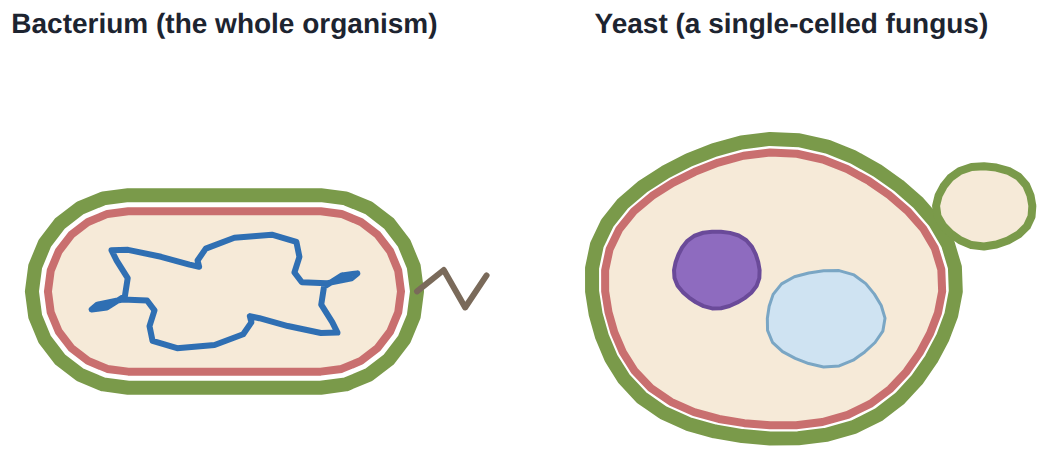
  • Single-celled organisms (bacteria, yeast) are one cell doing everything; multicellular organisms are many cells working together.
A bacterium and a yeast cell: single-celled living things.
Living things are made of cells · Sound on for the voiceover
Open the lesson →

What do plant and animal cells share?

Try firstWhat does the cell membrane do?

Check your answer

It controls what enters and leaves the cell.

Plant and animal cells share the nucleus (holds the DNA, controls the cell), the cell membrane (controls what enters and leaves) and the cytoplasm (where reactions happen).

Revision summary
  • Plant and animal cells share the nucleus (holds DNA, controls the cell), cell membrane (controls what gets in and out) and cytoplasm (where reactions happen).
  • Both also have mitochondria (release energy).
  • Plant cells also have a cell wall, chloroplasts (where photosynthesis captures light energy to make food) and a large vacuole.
An animal cell and a plant cell: both have a nucleus, membrane and cytoplasm; the plant cell adds a wall, chloroplasts and a vacuole.
Parts of a cell · Sound on for the voiceover
Open the lesson →

What makes a plant cell different?

Try firstName two parts a leaf cell has that a cheek cell lacks, and say what each does.

Check your answer

Any two of: cell wall (support), chloroplasts (photosynthesis), large vacuole (keeps the cell firm, stores sap).

Plant cells have three parts animal cells don't: a cell wall for support, chloroplasts for photosynthesis and a large vacuole that keeps the cell firm.

Both have mitochondria (release energy) and ribosomes (make proteins). How many of each a cell has depends on its job.

Revision summary
  • Only plant cells have a cell wall (support), chloroplasts (photosynthesis) and a large vacuole (keeps the cell firm, stores sap).
  • Plant and animal cells both have a nucleus, membrane, cytoplasm, mitochondria (release energy from food) and ribosomes (make proteins).
  • How many of each part a cell has depends on its job: muscle cells have many mitochondria; root hair cells have no chloroplasts.
An animal cell and a plant cell. Only the plant cell has a cell wall (green outline), chloroplasts and a large vacuole (pale blue); both have mitochondria (orange).
Plant and animal cells · Sound on for the voiceover
Open the lesson →

Why are cells different shapes?

Try firstGive one feature of a nerve cell and explain how it helps.

Check your answer

A long axon, so it can carry signals a long way through the body.

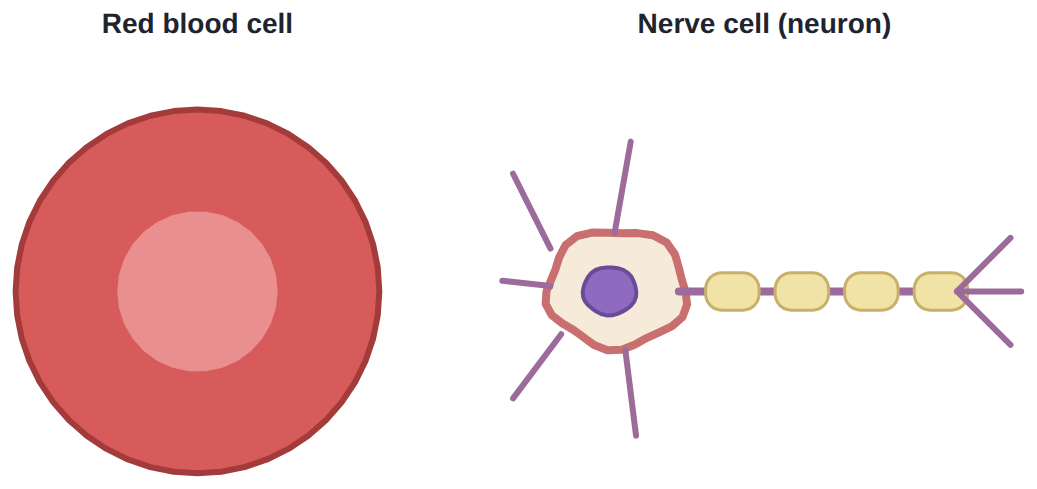
Cells with the same DNA specialise: each develops a shape and parts that suit its job. Red blood cells have no nucleus (more haemoglobin); nerve cells have long axons; muscle cells have many mitochondria; root hair cells have a long extension.

Revision summary
  • Nearly all your cells have the same DNA; each specialised cell uses different instructions.
  • A specialised cell's shape and parts suit its job: red blood cells (no nucleus, haemoglobin), nerve cells (long axon), muscle cells (many mitochondria), root hair cells (long extension, no chloroplasts).
A red blood cell (no nucleus, biconcave) and a nerve cell (a long axon): shapes that suit their jobs.
Specialised cells · Sound on for the voiceover
Open the lesson →

What is a tissue?

Try firstName one animal tissue and one plant tissue, and say the job each does.

Check your answer

For example: muscle tissue contracts to move the body; xylem carries water up the plant.

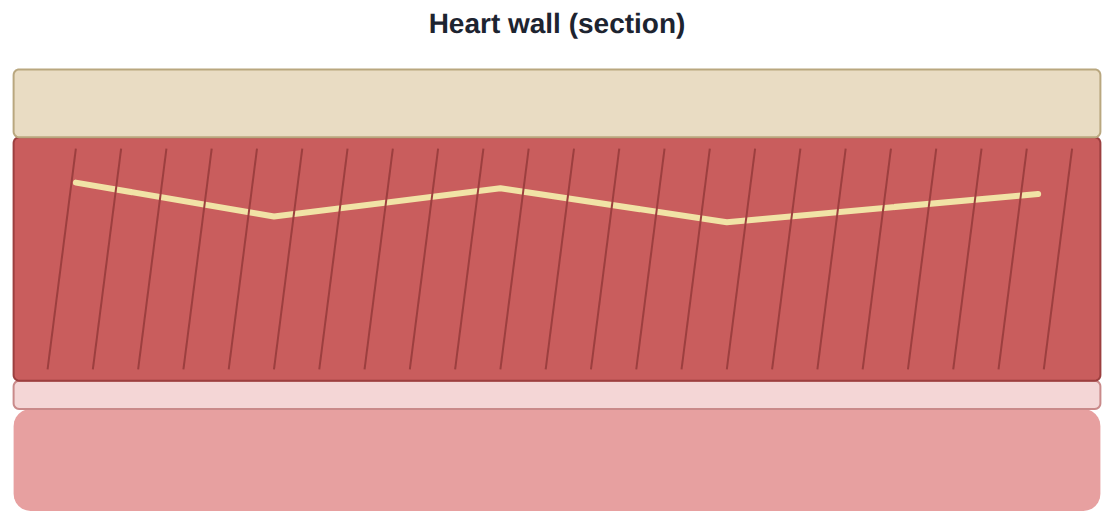
A tissue is a group of similar specialised cells working together to do one job. Muscle tissue contracts, epithelial tissue lines and protects, nervous tissue carries signals; in plants, xylem carries water and phloem carries sugar.

Together the cells do what one cell can't do alone. Several tissues working together make an organ.

Revision summary
  • A tissue is a group of similar specialised cells working together to do one job.
  • Animal tissues include muscle (contracts), epithelial (lines and protects), nervous (carries signals) and blood. Plant tissues include xylem (water), phloem (sugar) and palisade (photosynthesis).
  • A tissue can do what one cell can't do alone.
  • Next: organs are made of several tissues working together.
A section of the heart wall: layers of tissue, each a group of similar cells doing one job.
Tissues · Sound on for the voiceover
Open the lesson →

What is an organ made of?

Try firstName two tissues in a leaf and say what each does.

Check your answer

For example: palisade mesophyll (photosynthesis) and xylem (brings water).

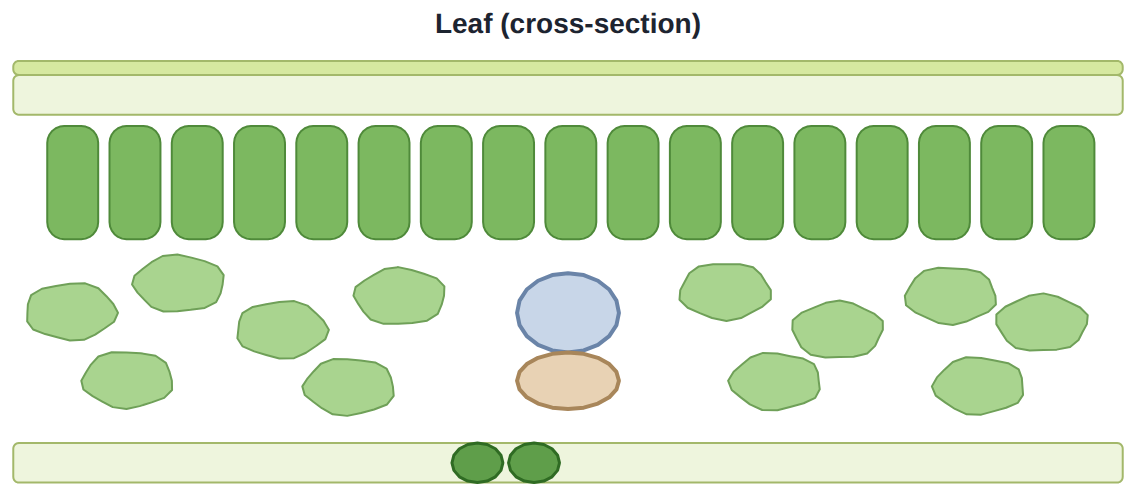
An organ is several tissues working together. A leaf has epidermis, mesophyll, xylem and phloem; the heart has cardiac muscle, lining, connective and nervous tissue. Cells → tissues → organs → systems → organism.

Revision summary
  • Cells → tissues → organs → organ systems → organism.
  • A tissue is a group of similar cells doing one job; an organ is several tissues working together.
  • A leaf: epidermis, palisade and spongy mesophyll, xylem and phloem. The heart: cardiac muscle, lining, connective tissue, nervous tissue.
  • No single tissue can do everything an organ needs.
A leaf in cross-section: epidermis, two kinds of mesophyll, xylem and phloem, each a tissue.
A leaf is an organ · Sound on for the voiceover
Open the lesson →

Organ systems

Try firstSay in a sentence how a plant's vascular system and an animal's circulatory system are alike, and one way they differ.

Check your answer

Alike: both move materials to every cell. Different: the animal pumps blood with a heart, while the plant has no pump and water is pulled up the xylem as it evaporates from the leaves.

An organ system is a group of organs that work together to do a job the whole organism needs. If one organ fails, the system fails. The circulatory system and a plant's vascular system both move materials to every cell.

Revision summary
  • An organ system is a group of organs working together to do a job the whole organism needs.
  • Animal example: circulatory (heart, vessels, blood). Plant example: vascular (roots, xylem, phloem, leaves).
  • If any organ in a system fails, the system can fail at its job.
  • Both systems solve the same problem: moving materials to every cell.
Open the lesson →

Year 8 Physics

Moving or stored?

Try firstName one example each of chemical, gravitational and elastic potential energy.

Check your answer

For example: a battery or food (chemical), a ball held up high (gravitational), a stretched slingshot (elastic).

Kinetic energy is energy of activity: movement, heat, sound, light and electricity. Potential energy is stored: chemical (food, fuel, batteries), gravitational (things up high) and elastic (things stretched or squashed).

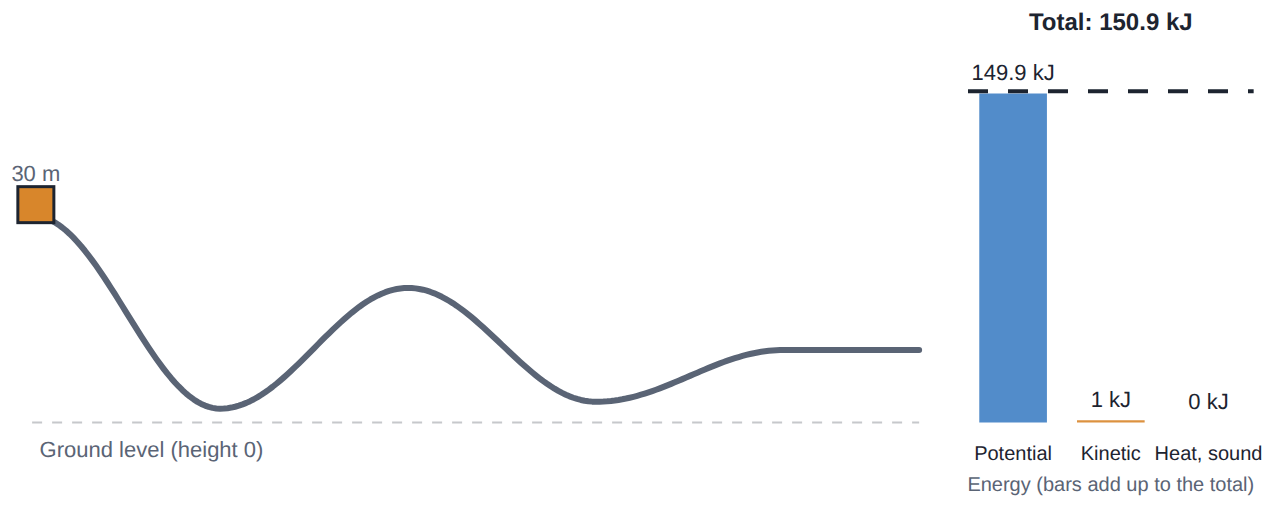
Energy can change from one family to the other and back, as on a roller coaster, but the total stays the same.

Revision summary
  • Kinetic energy is energy of activity: movement, heat (thermal), sound, light, electrical.
  • Potential energy is stored: chemical (food, fuel, batteries), gravitational (height), elastic (stretched or squashed).
  • How much is stored depends on height and mass, how far something is stretched, or what a substance is made of.
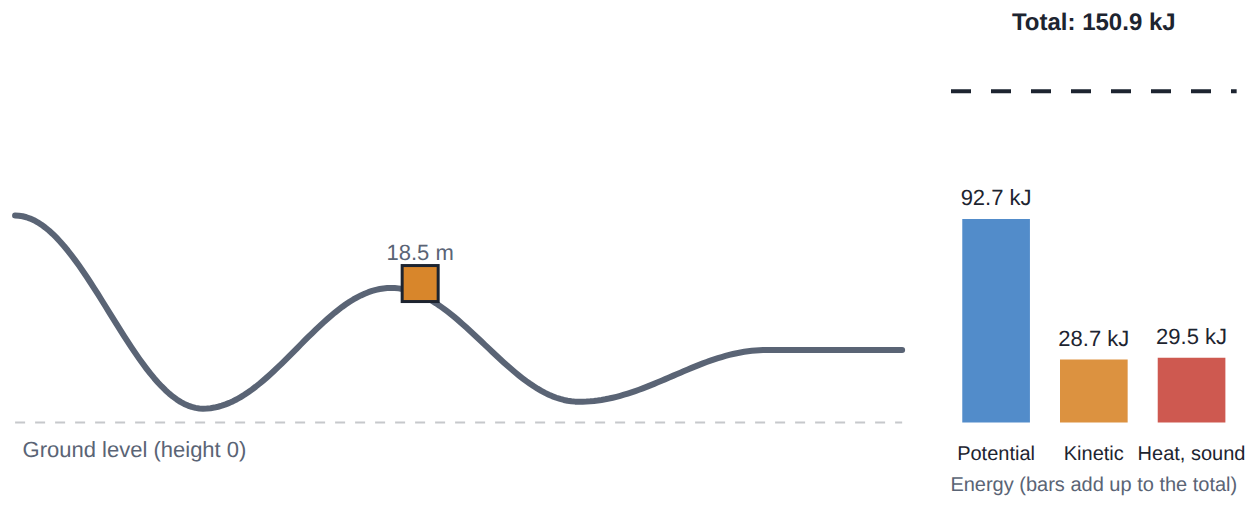
  • Energy changes between kinetic and potential, as on a roller coaster. The total stays the same (this coaster has no friction; the next lesson adds it).
A roller coaster car at the top of the first hill: almost all of its energy is gravitational potential (blue). As it rolls down, that becomes kinetic (orange).
Kinetic and potential energy · Sound on for the voiceover
Open the lesson →

Transfer or transformation?

Try firstA wind-up toy runs across the floor. Is 'spring to moving wheels' a transfer or a transformation? Name a by-product.

Check your answer

A transformation (elastic potential to kinetic). By-products: heat (friction) and sound.

In a transfer, the same type of energy moves to a new place (heat into your hands). In a transformation, energy changes type (chemical → electrical → light in a torch).

Almost every transformation also makes some by-product heat that isn't wanted. It isn't destroyed: it spreads into the surroundings.

Revision summary
  • Transfer: the same type of energy moves to a new place (heat into your hands, sound to your ear).
  • Transformation: energy changes type (chemical → electrical → light in a torch).
  • Almost every transformation also makes by-product heat (and sometimes sound) that isn't the useful output.
  • By-product energy isn't destroyed: it spreads into the surroundings.
Transfer and transformation · Sound on for the voiceover
Open the lesson →

Follow the energy

Try firstDraw a flow diagram for a battery-powered fan, with one by-product.

Check your answer

Battery (chemical) → wires (electrical) → spinning blades (kinetic), with a by-product of heat (and sound) from the motor.

Real systems pass energy through many stages. A flow diagram shows each stage as a box, each transfer or transformation as an arrow, and every by-product (mostly heat and sound) as a side arrow.

Tracing all the outputs shows where energy goes. By-products go to the surroundings; they're never destroyed.

Revision summary
  • Real systems pass energy through many stages: trace it one step at a time.
  • A flow diagram has a box for each stage, an arrow for each transfer or transformation, and side arrows for by-products.
  • Count every output, useful and by-product. By-products (mostly heat and sound) go to the surroundings; they are never destroyed.
A roller coaster with friction: the red bar grows as some of the car's energy becomes heat and sound along the track.
Following energy through a system · Sound on for the voiceover
Open the lesson →

Year 8 Earth and space

Why do some rocks have big crystals?

Try firstA rock has crystals too small to see. Did it form underground or at the surface? Why?

Check your answer

At the surface: it cooled quickly, so many crystals started and none had time to grow large.

Igneous rock forms when magma or lava cools. Crystal size records the cooling rate:

  • Slow cooling underground (intrusive): few crystals start and grow large. Granite.
  • Fast cooling at the surface (extrusive): many crystals start and stay small. Basalt.
  • Instant cooling: no pattern at all, glass. Obsidian.
Revision summary
  • Igneous rock forms when magma (underground) or lava (at the surface) cools and sets.
  • Slow cooling (intrusive, underground): few crystals start and grow large. Granite, gabbro.
  • Fast cooling (extrusive, at the surface): many crystals start, all stay small. Basalt.
  • Instant cooling: no time for a pattern, so glass. Obsidian, pumice.
  • Crystal size is a record of cooling rate.
Crystal size and cooling · Sound on for the voiceover
Open the lesson →

What's inside the Earth?

Try firstName the only liquid layer and explain what the lithosphere is.

Check your answer

The outer core. The lithosphere is the crust plus the rigid top of the mantle: the rigid outer shell broken into plates.

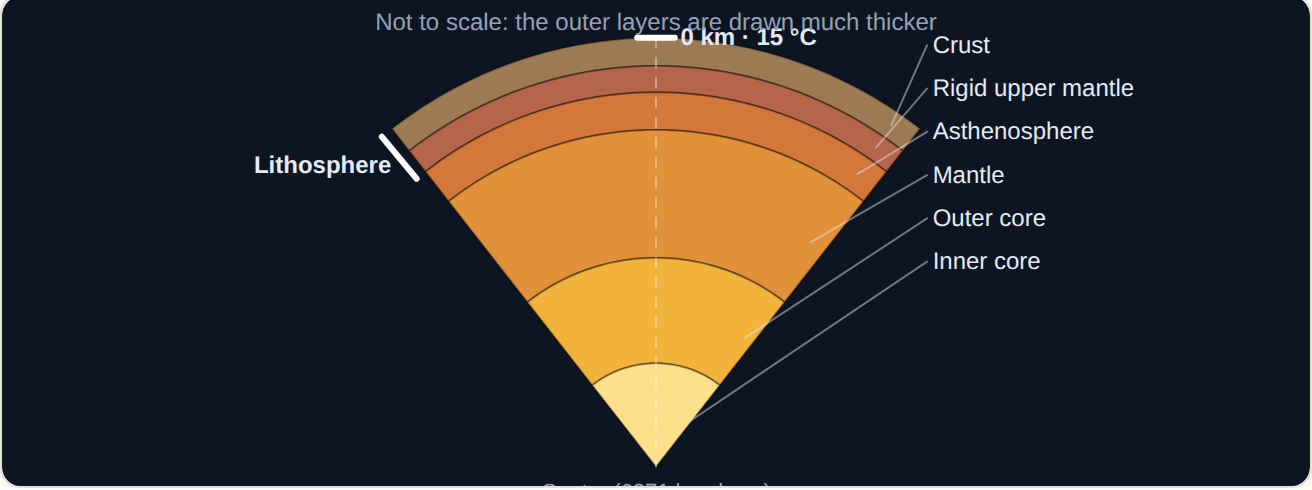
Layers: crust (thin, solid), mantle (solid, flows very slowly), outer core (liquid), inner core (solid). Temperature and pressure rise with depth. The lithosphere (crust + rigid upper mantle) is the rigid outer shell broken into plates; it rests on the soft asthenosphere.

Revision summary
  • Crust (thin, solid) → mantle (thick, solid but flows very slowly) → outer core (liquid iron and nickel) → inner core (solid iron and nickel).
  • Temperature and pressure increase with depth.
  • The lithosphere (crust + rigid top of the mantle) is the rigid outer shell, broken into plates; it rests on the soft, slowly flowing asthenosphere.
A wedge of the Earth: crust, mantle, outer core and inner core (outer layers drawn thicker than to scale).
Earth's layers · Sound on for the voiceover
Open the lesson →

What moves the plates?

Try firstWhat drives the movement of tectonic plates?

Check your answer

Convection currents in the mantle: heated rock rises, spreads, cools and sinks, carrying the plates. The heat comes from the core and from radioactive elements in the mantle.

The lithosphere is broken into rigid plates that move a few centimetres a year.

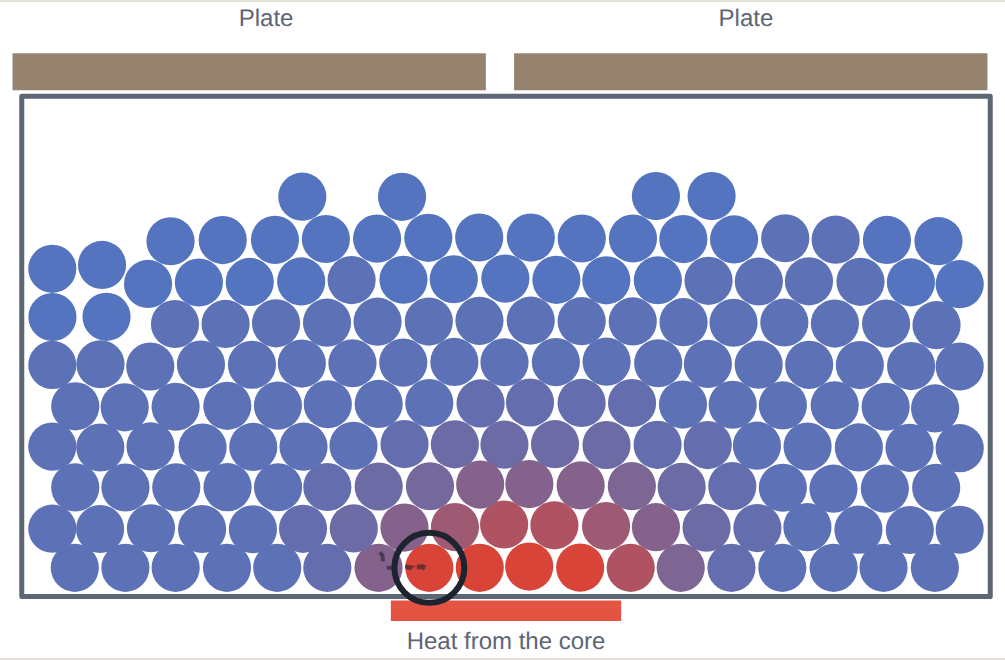
Earth's inner heat, from the core below and from radioactive elements in the mantle rock, drives convection currents in the mantle: hot rock is less dense and rises, spreads under the plates, cools and sinks. The currents carry the plates along.

Revision summary
  • The lithosphere (crust and top of the mantle) is broken into rigid tectonic plates, moving a few centimetres a year.
  • Earth's inner heat (from the core below, and from radioactive elements in the mantle rock) drives convection currents in the mantle: hot rock is less dense and rises, spreads, cools and sinks.
  • The currents carry the plates: apart above rising rock, together above sinking rock. This is a simplified picture: the sinking edges of plates (slab pull) do much of the pulling.
  • The mantle is solid rock that flows extremely slowly, not liquid magma.
A model of the mantle: hot rock (red) rises above the core, spreads under the plates, cools (blue) and sinks.
What moves the plates · Sound on for the voiceover
Open the lesson →