Maths reference: Year 8 Statistics
The words and methods from Year 8 Statistics, each with an example and, where it helps, a picture of the board.
Print a cheat sheet (the whole course or one unit, with board pictures)
Samples
A census is exact but slow and costly; a sample estimates. An experiment changes something on purpose; an observation watches.
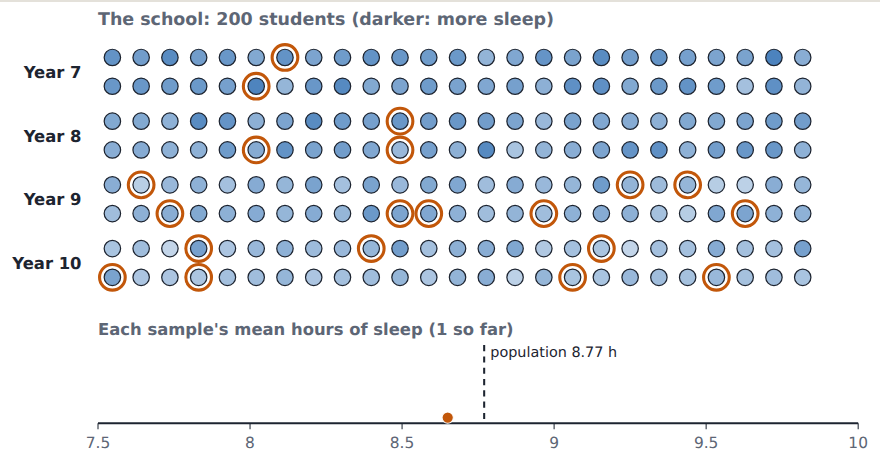
Bias pushes a result one way: sampling bias (who is asked), response bias (how they are asked), measurement bias (the tool). A bigger sample doesn't fix it.
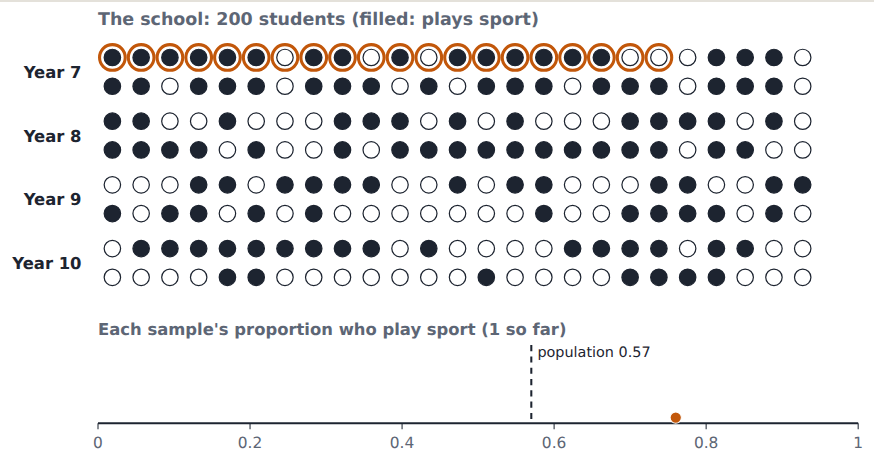
Simple random: same chance for all. Systematic: every kth from a random start. Stratified: at random within each group, in proportion. Convenience and quota: someone chooses, so they can be biased.
Describe the shape (symmetric or skewed), the centre (mean, median) and the spread (range), then estimate the population with the method and size. Primary data you collect; secondary data others collected.
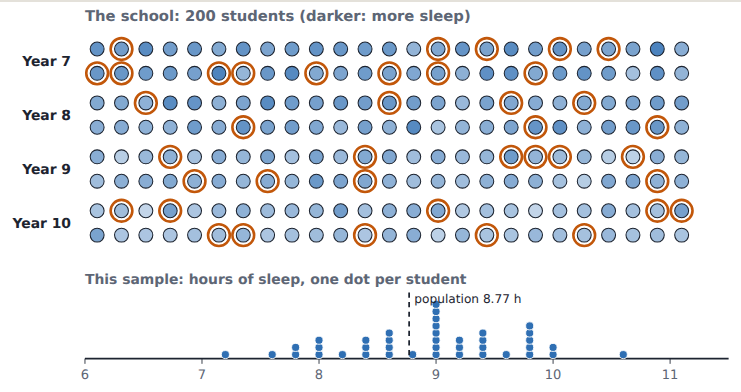
Fair samples from one population give different results by chance. Their results scatter around the population's value, closer for bigger samples.
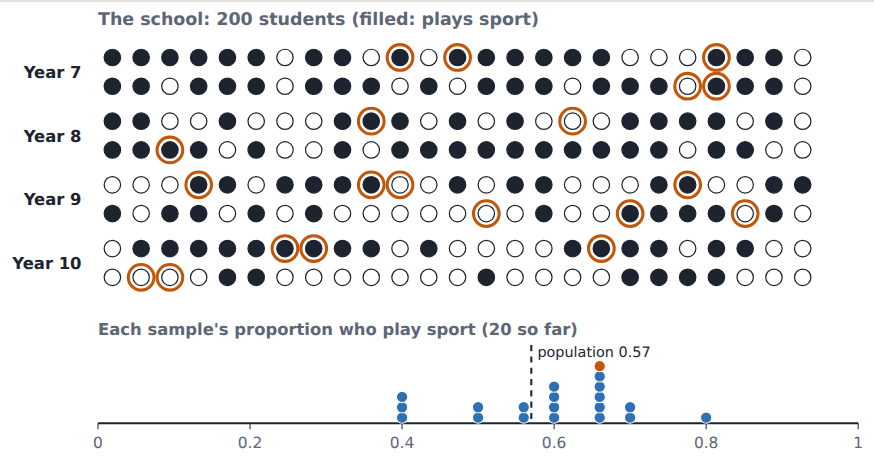
Infer only about the population sampled, give an estimate, and say how sure you are (size and method). Collect data with consent and anonymity.