Maths reference: Year 7 Measurement
The words and methods from Year 7 Measurement, each with an example and, where it helps, a picture of the board.
Print a cheat sheet (the whole course or one unit, with board pictures)
Words
A ratio of the drawing (or model) to the real thing. Each 1 unit on the drawing is 50 units in real life.
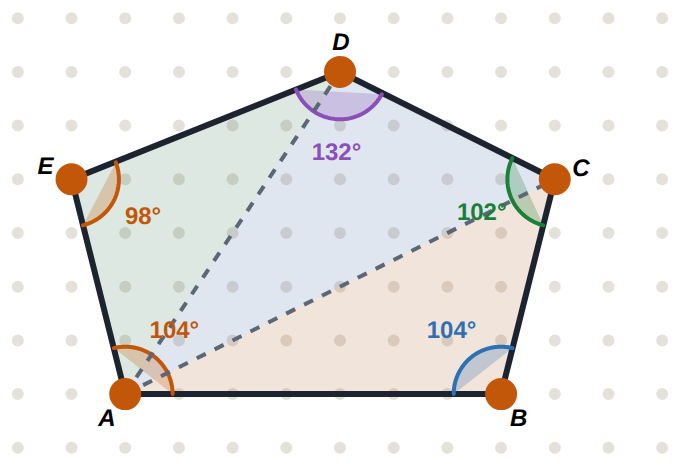
An angle inside a shape, at one of its corners.
A closed shape with straight sides: triangle (3), quadrilateral (4), pentagon (5), hexagon (6), octagon (8).
All sides and all angles are equal, so each angle is the angle sum shared equally: a regular hexagon has angles of .
Area
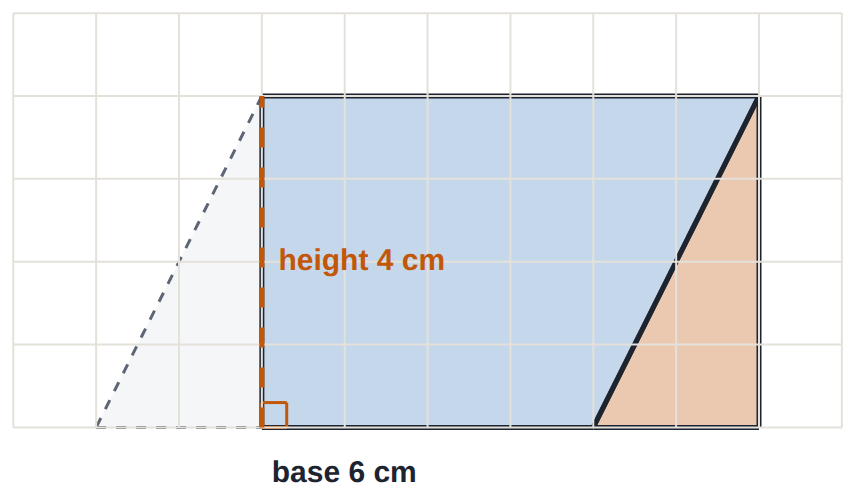
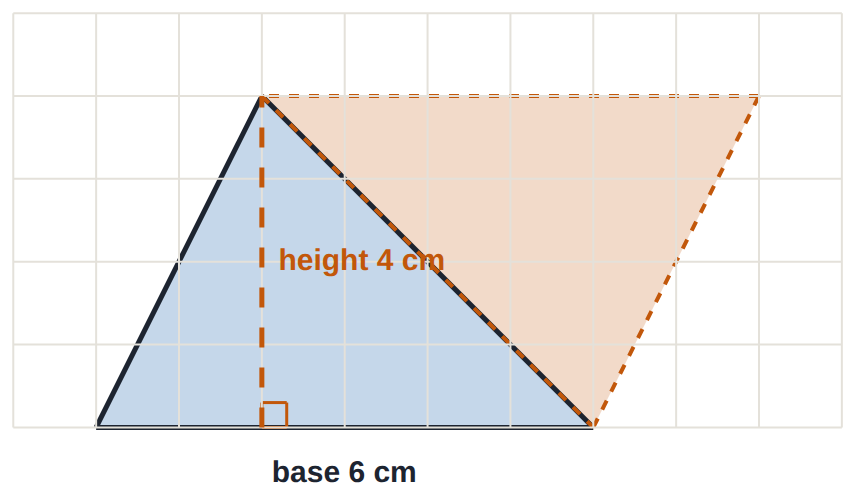
The distance from the base to the opposite side or corner, at a right angle (∟) to the base. A slanted side is longer, and is not the height.
Cut the triangle off one end and move it: a rectangle with the same base and height.
Two copies make a parallelogram with the same base and height; the triangle is half.
Split the shape into rectangles and triangles and add the parts, or subtract a missing part from a bigger shape. Put every length in the same unit first.
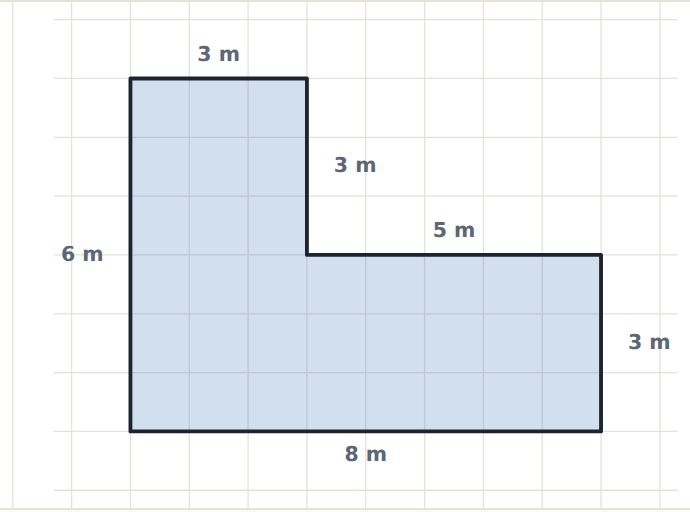
Area counts squares: cm², m². A 1 m square is 100 cm by 100 cm.
Volume
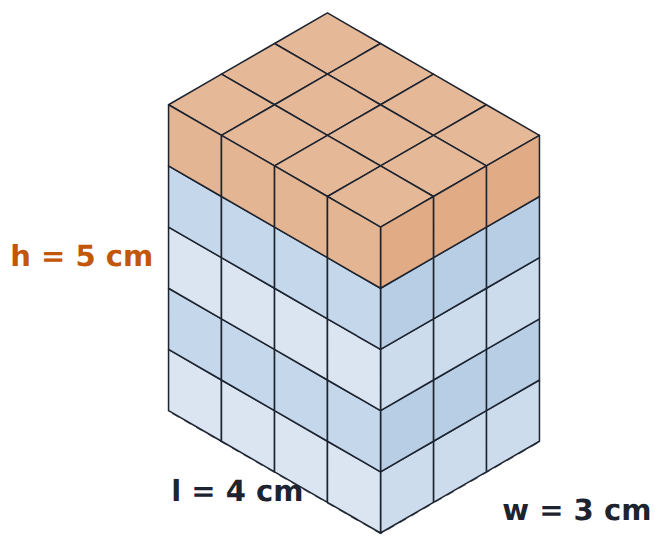
Each layer is the base (the cross-section); the height counts the layers. For a box, .
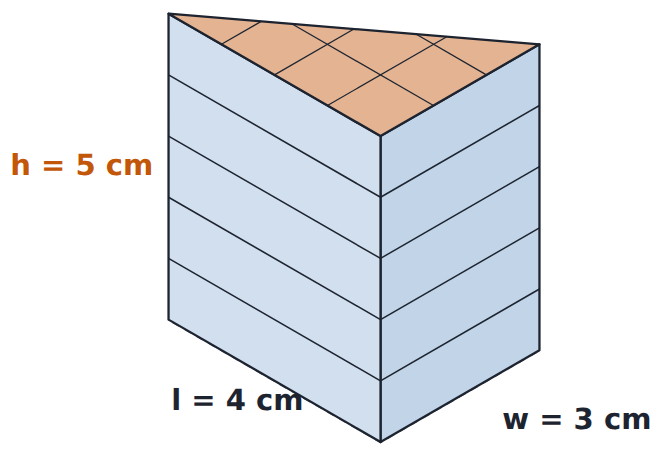
The shape that is the same all the way along a prism, like a slice of bread. A triangular prism's cross-section is a triangle: halve first.
How much a container holds. A 10 cm cube holds 1 litre.
The area of the end times the length, for any right prism. Divide to find a missing length.
Circles
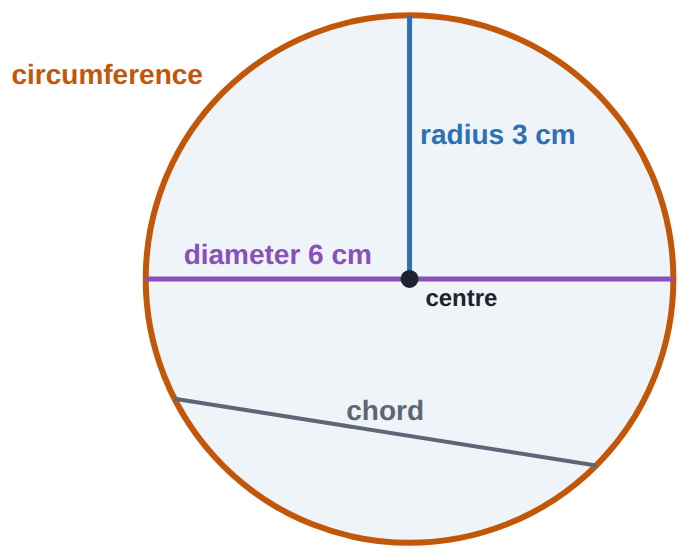
The radius goes from the centre to the edge; the diameter right across through the centre. A chord joins any two points; the diameter is the longest.
The circumference divided by the diameter: the same for every circle. 3.14 and 22/7 are approximations.
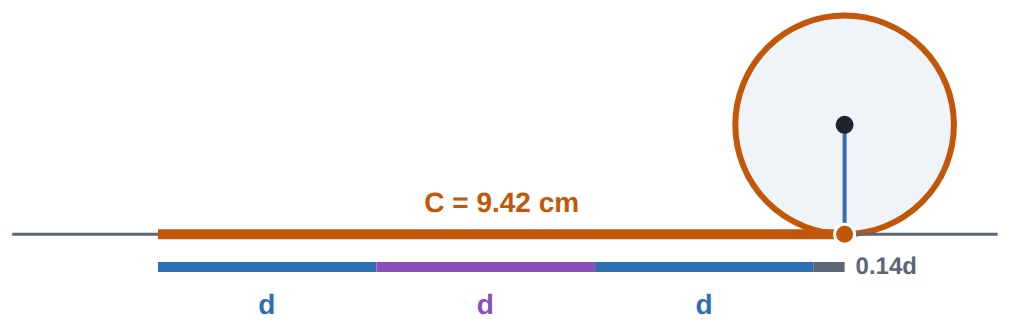
Use the diameter, or double the radius. Backwards: . Exact answers keep π: cm.
Parallel lines
Parallel lines go the same way and never meet; arrows (>>) mark them. A transversal crosses both, making eight angles.
The same place at each crossing (an F shape). With parallel lines they are equal.
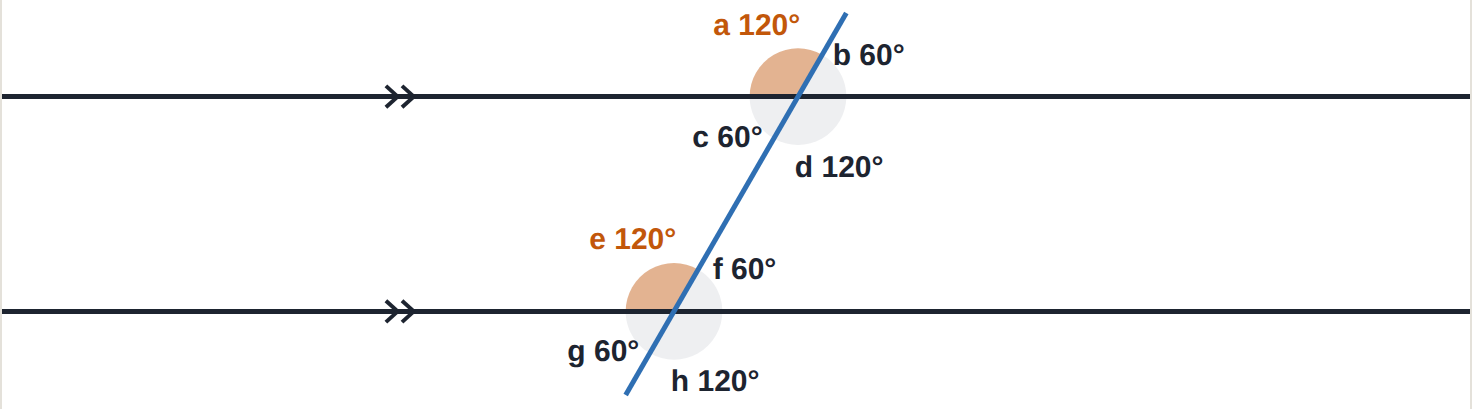
Between the parallel lines, on opposite sides of the transversal (a Z shape). With parallel lines they are equal.
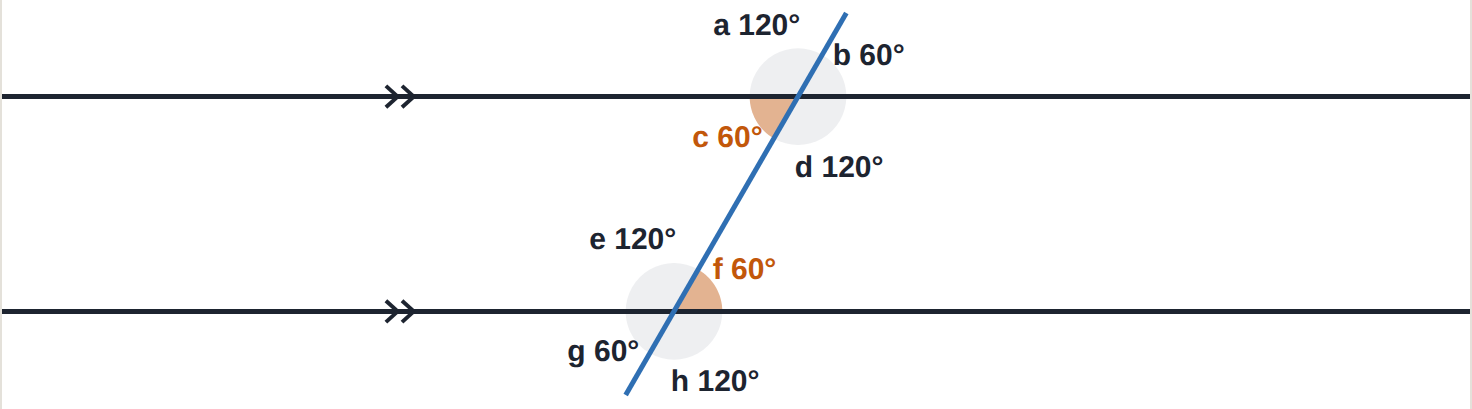
Between the parallel lines, on the same side (a C shape). With parallel lines they add to : they are not equal unless both are .
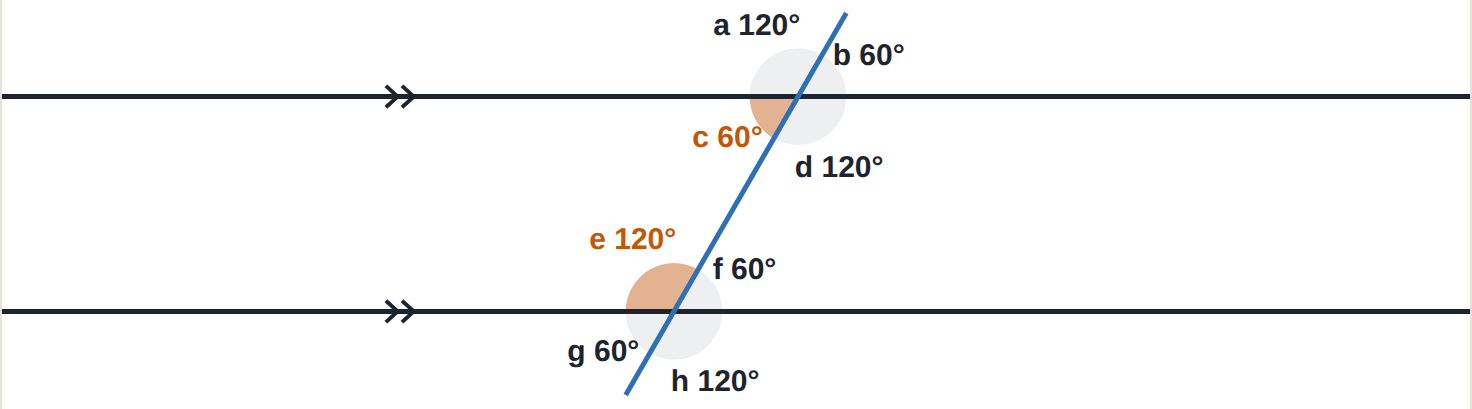
Opposite each other at one crossing: always equal, parallel lines or not. Not one of the parallel-line pairs.
For each angle you find, name the rule: corresponding or alternate angles are equal; co-interior angles add to ; angles on a straight line add to .
Rules
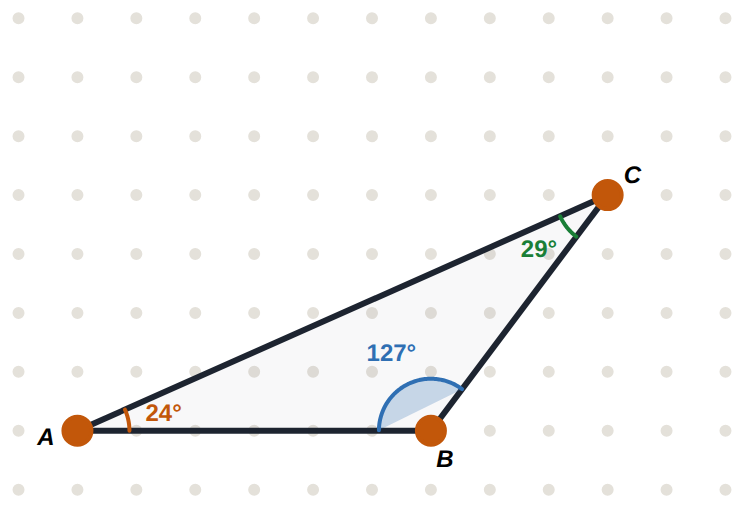
True for every triangle, whatever its shape or size: tear off the corners and they fill a straight line.
Split it into triangles from one corner: a shape with sides makes triangles. A pentagon: .