Maths reference: Year 8 Algebra
The words and methods from Year 8 Algebra, each with an example and, where it helps, a picture of the board.
Print a cheat sheet (the whole course or one unit, with board pictures)
Brackets
Multiply every term inside the bracket by the number outside. Signs come too: .
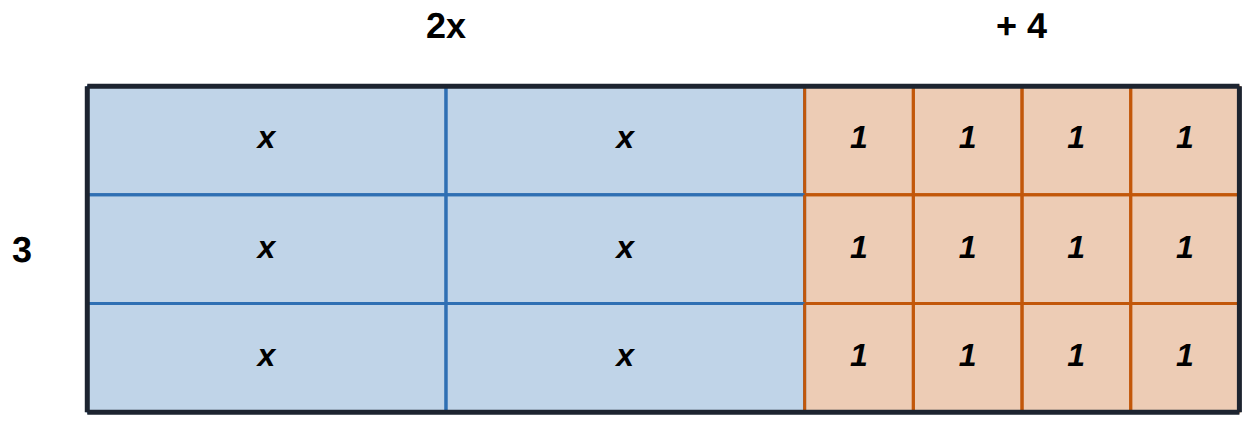
Terms with the same letters and powers can be added: . Collect them after expanding.
A negative outside flips the sign of every term inside: .
Divide every term by the highest common factor and put it outside: , and . Check by expanding.
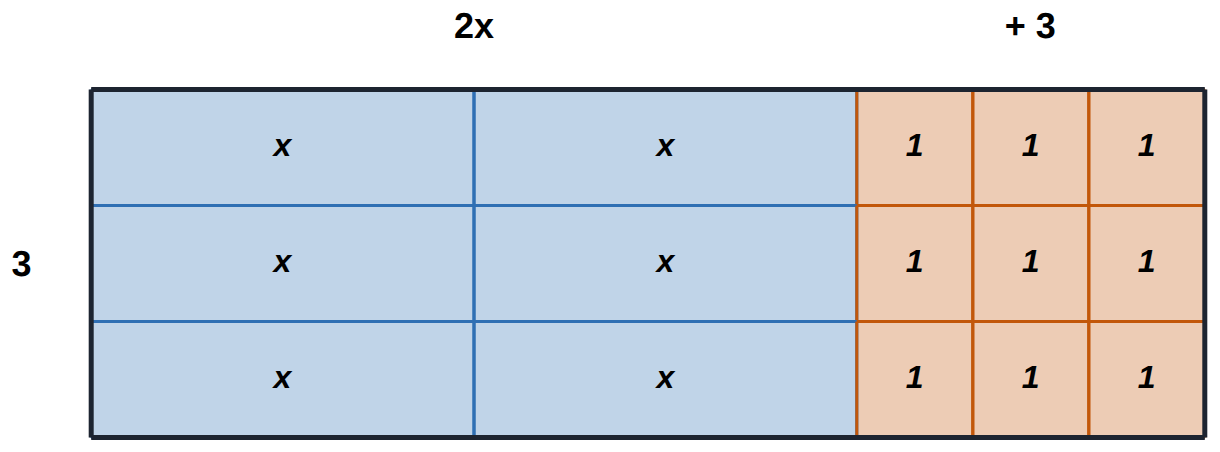
Undo what was done to the letter, last step first, doing the same to both sides. Check by putting in numbers: gives , and .
Equations and inequalities
Expand any brackets. Take the smaller term from both sides, undo the numbers with the inverse (add to undo ), then divide.
Put the answer into both sides of the first equation. Equal sides: right. Unequal: look for the first step that went wrong.
Do the same to both sides, as for an equation. Multiplying or dividing by a negative **reverses** the sign ( but ). Check a value from your answer.
Open circle for and (the end is not included), closed for and ; shade towards the solutions.

Lines
, the number in front of : one step right, the line goes up (down when is negative). A bigger is steeper; is flat.
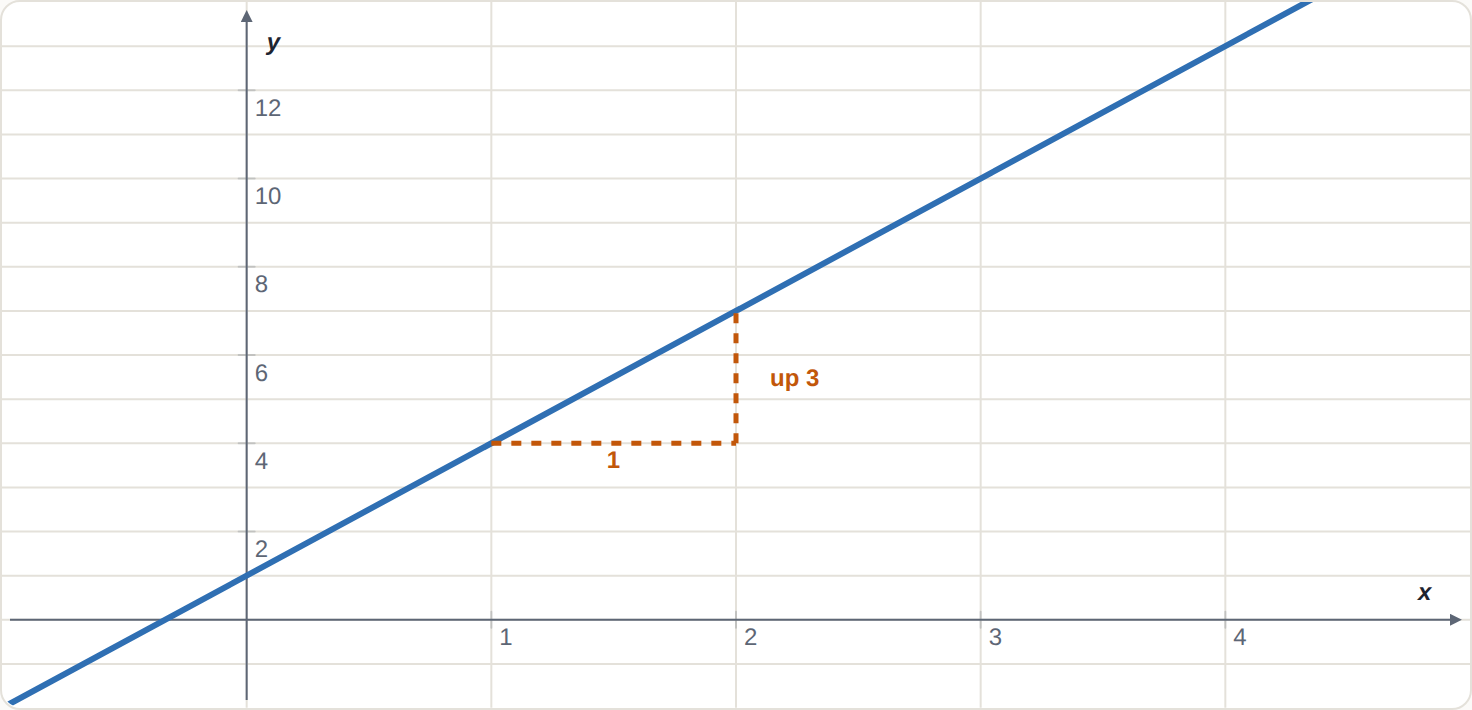
, the number on its own: where the line crosses the -axis (at ). Changing moves the line up or down without changing its steepness.
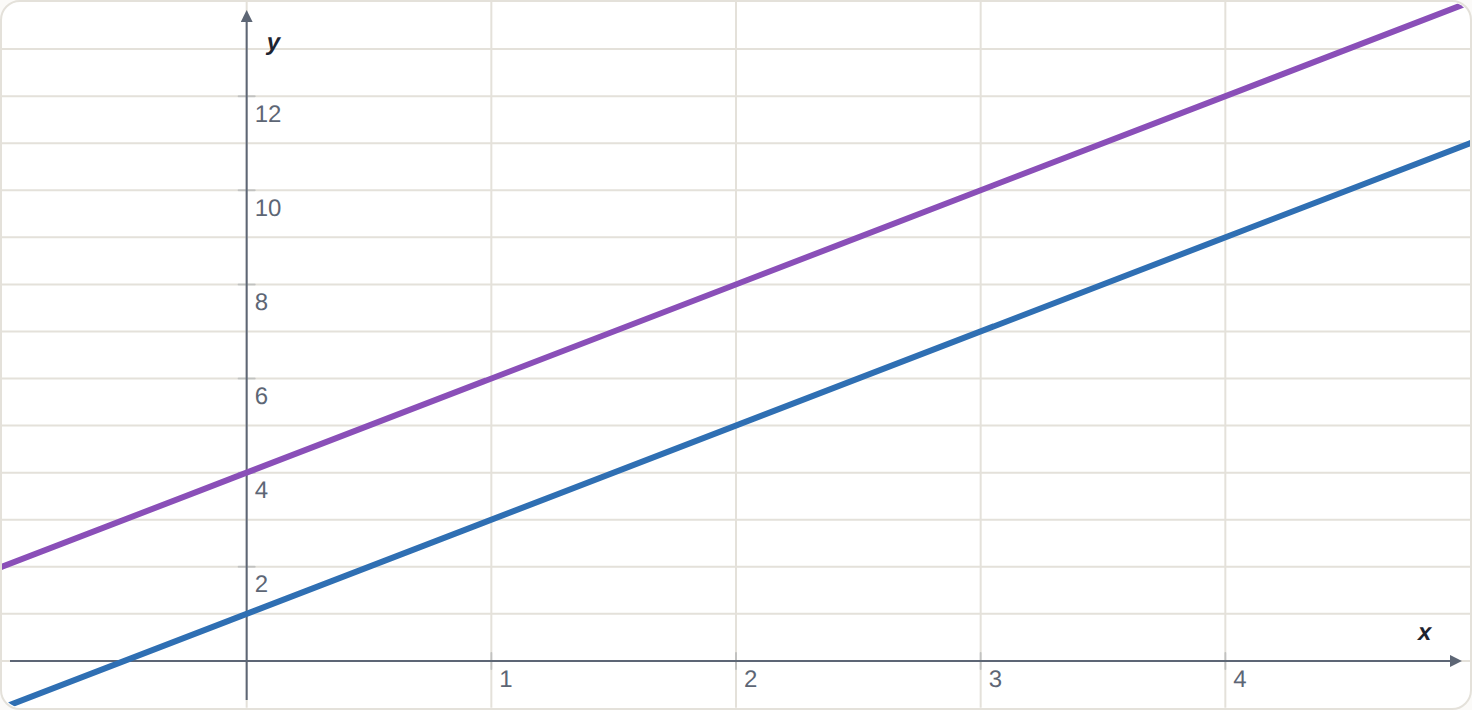
The same gives the same steepness, so the lines never meet. is moved up 3.
One letter: every point on has (a vertical line); every point on has (horizontal).
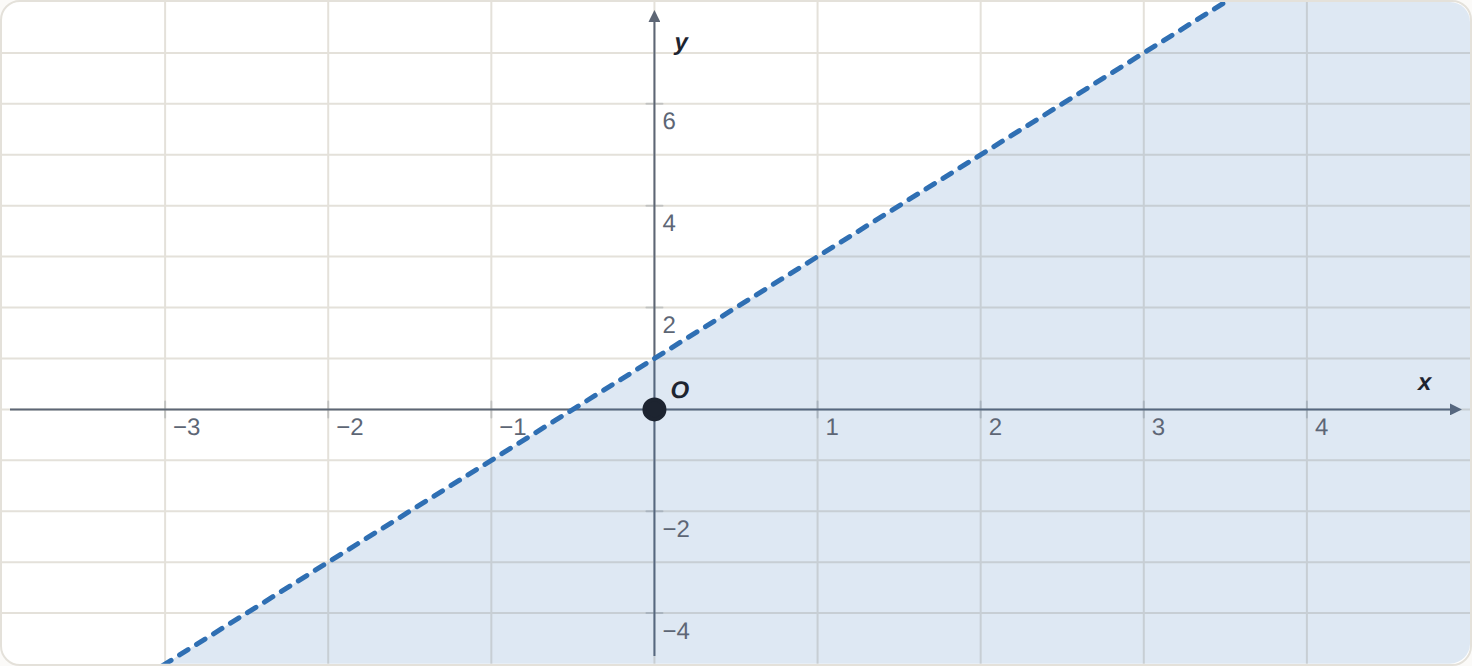
Draw the boundary : dashed for and , solid for and . Test a point such as : true, shade its side; false, the other side.
Solving and modelling
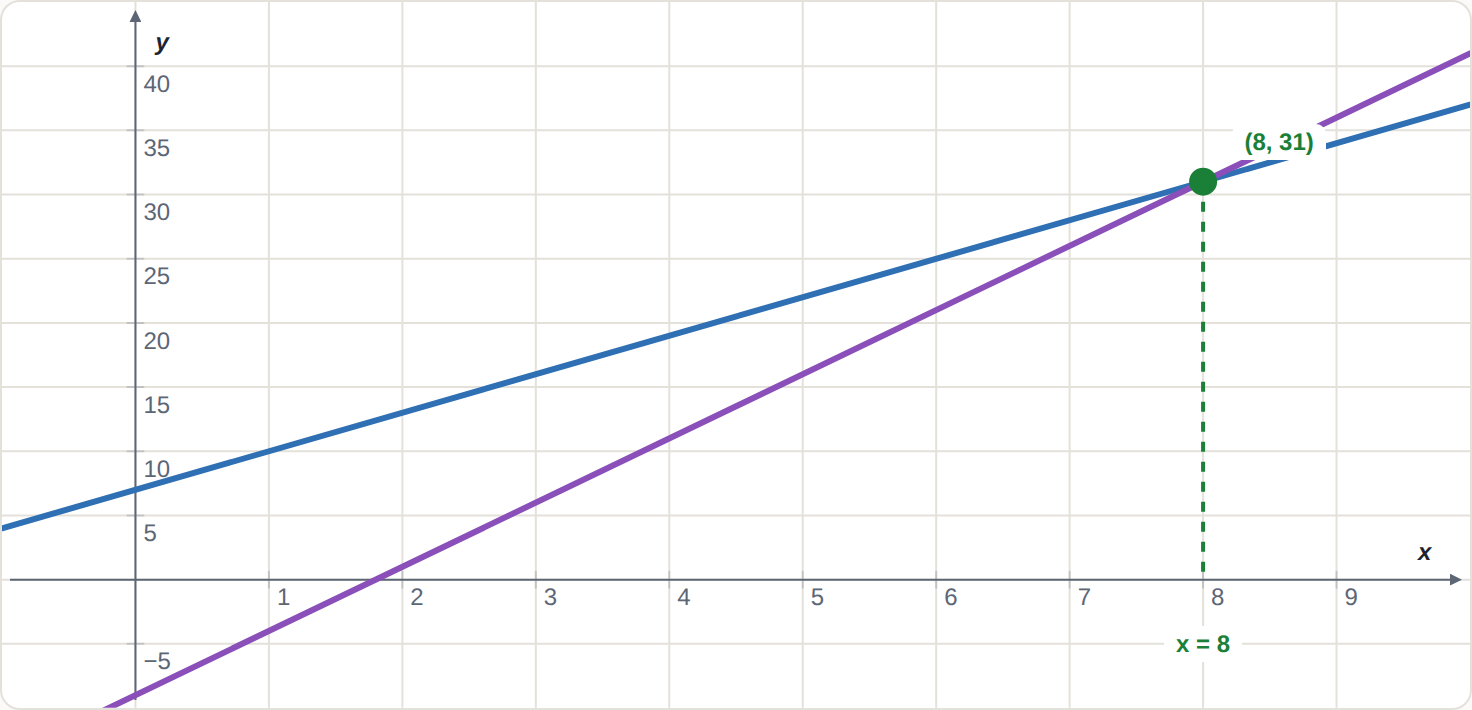
Draw each side as a line: and . Where they meet, both sides are equal, so the there is the solution.
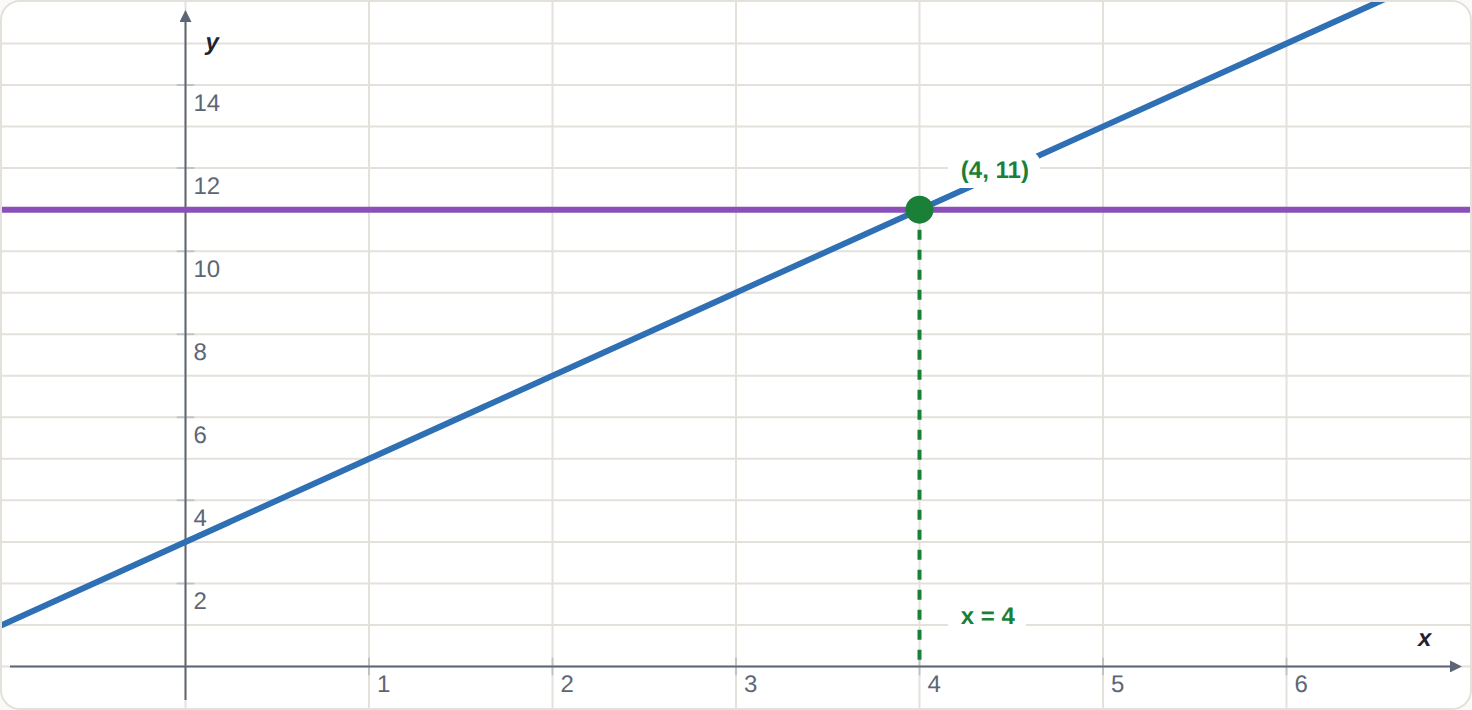
A starting amount plus a rate: the start is (4 dollars to get in) and the rate is (2 dollars per km).
Put both rules on one graph. Where the lines cross, the plans cost the same; on either side, the lower line is cheaper. Check where the model makes sense (no negative gigabytes).