formula
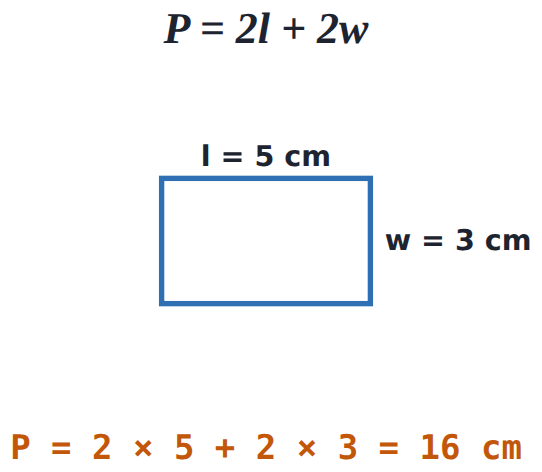
A rule that gives one quantity from others, written with letters. This one gives the perimeter of a rectangle.
Year 7 Algebra · The words and methods from the lessons, with an example of each.
A rule that gives one quantity from others, written with letters. This one gives the perimeter of a rectangle.
"5 more than n" is . "5 less than n" is : you start from and take 5 away, so comes first.
With , is 8, not 24.
Replace each letter with its value, write in the × signs, then work it out: brackets, then × and ÷, then + and −.
A letter for a quantity that can change. Each rectangle has its own , and .
A number that stays the same, such as a 20 dollar call-out fee. is a constant too.
In an equation, a letter can stand for one particular number: here only works.
Brackets keep a part together so it is worked out first. "Add 3, then double the result" is ; "double, then add 3" is .
Say what the letter stands for (a number that changes), multiply it by the amount for each one, then add anything paid once.
Substitute what you know, then solve the equation that is left by undoing. Check by substituting back.
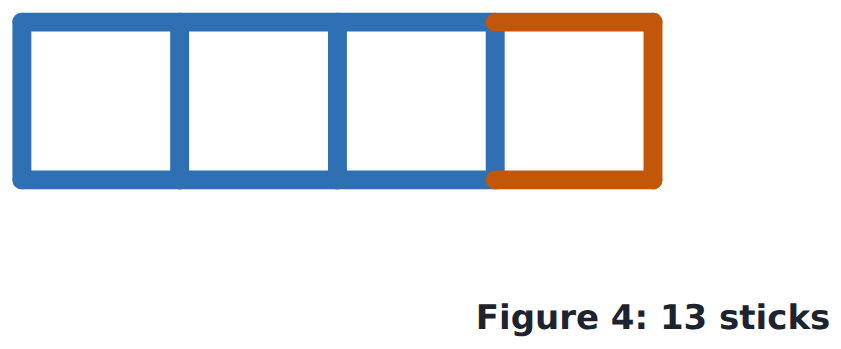
What each new figure adds goes in front of ; what is there at the start goes on its own. Figure 4 has sticks.
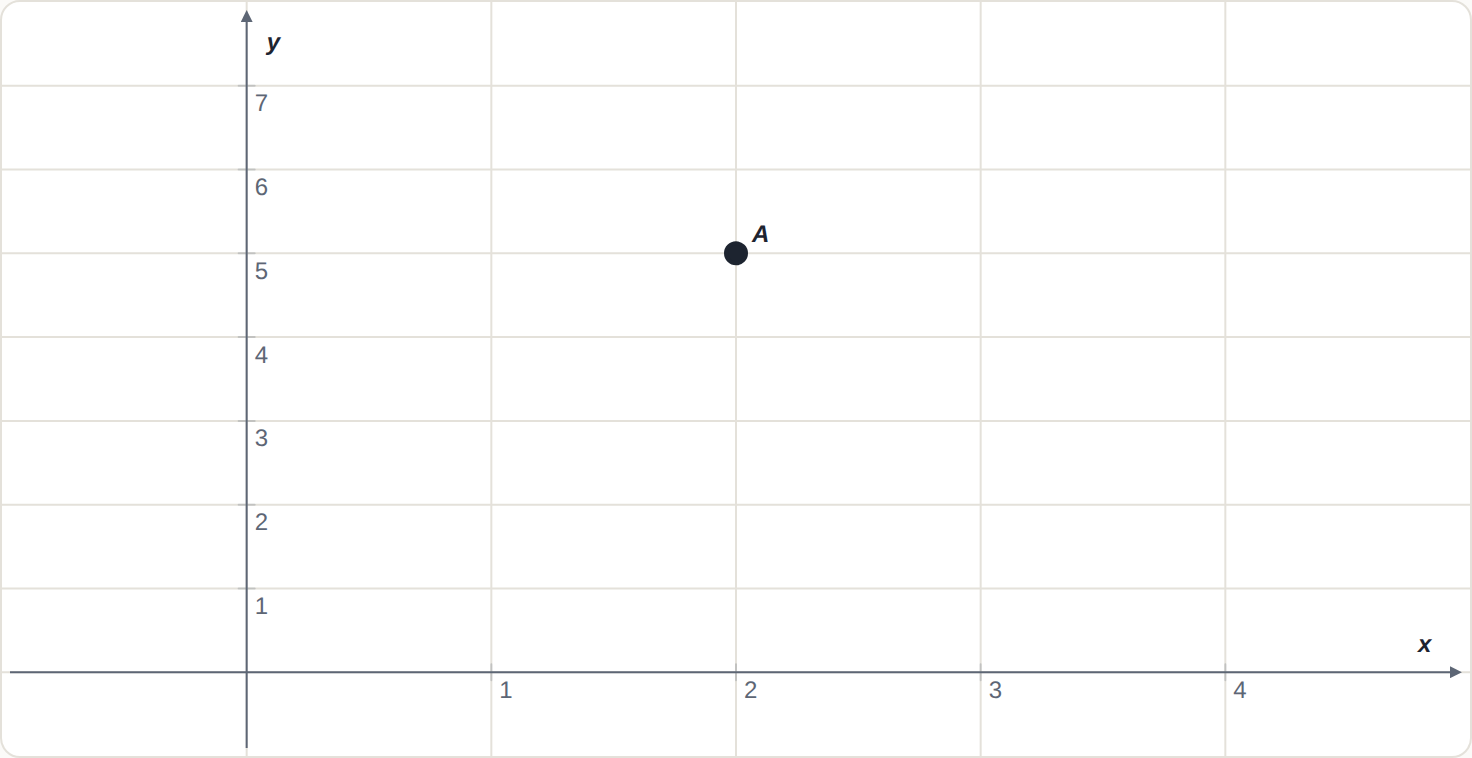
Input first, then output. To plot it: across 2 on the -axis, then up 5.
A rule turns each input into an output . Put the input in for : gives .
Choose inputs, work out each output from the rule ( here), and write them in pairs.
Find the value you know on its axis, go to the line, then read across to the other axis. Sections of a graph increase, decrease or stay constant.
To see what one letter does, change only that letter and keep the others the same. Record the results in a table.
A calculation with a letter in it. It has a value once you know the letter, but it does not say that anything is equal.
The value of the letter that makes the equation true.
Each step has an opposite that undoes it: adding and subtracting, multiplying and dividing.
Undo the steps done to with their opposites, last step first.

Take the same number of from both sides first, so the bags are on one side only.
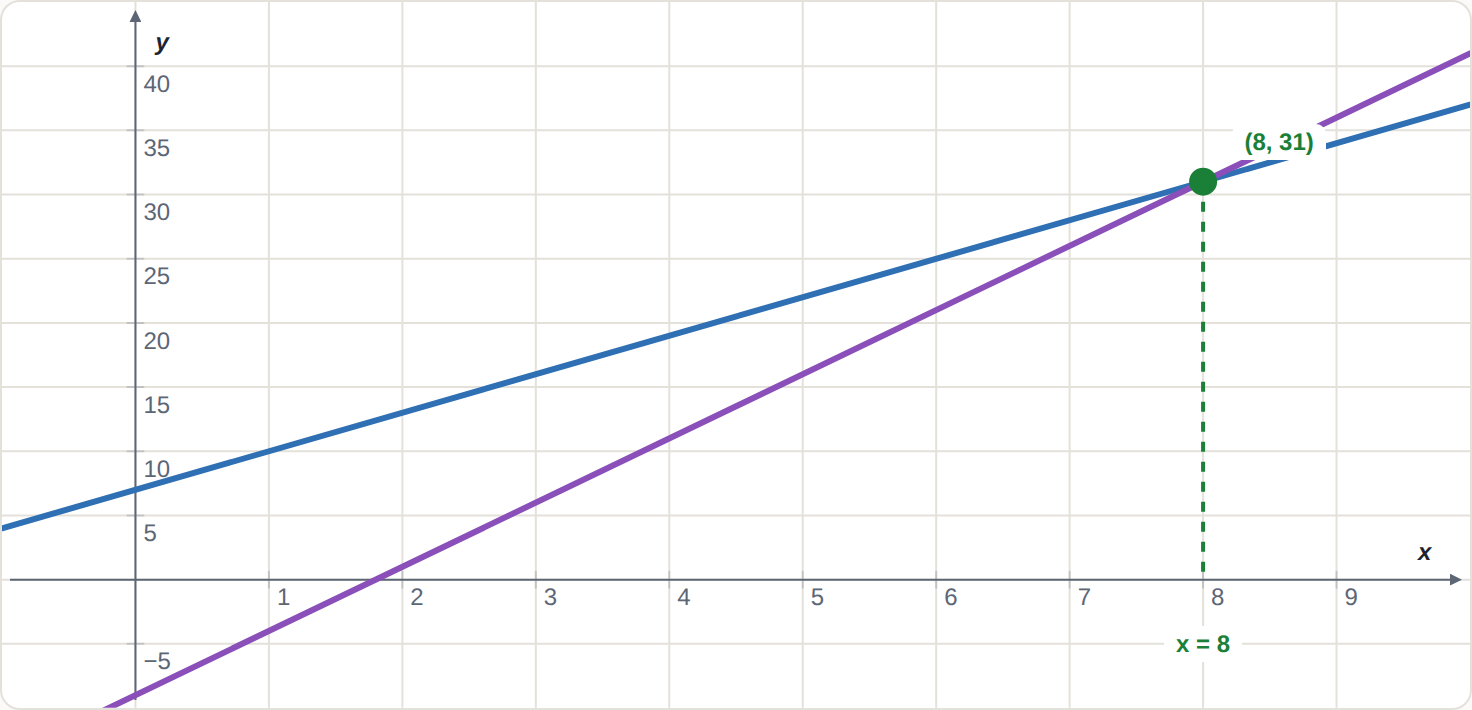
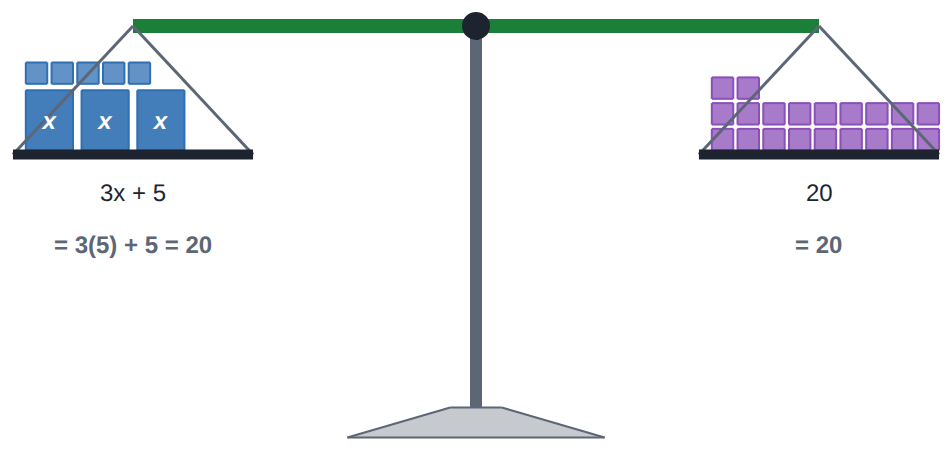
Two expressions with = between them: a statement that they are equal, like a balanced scale.
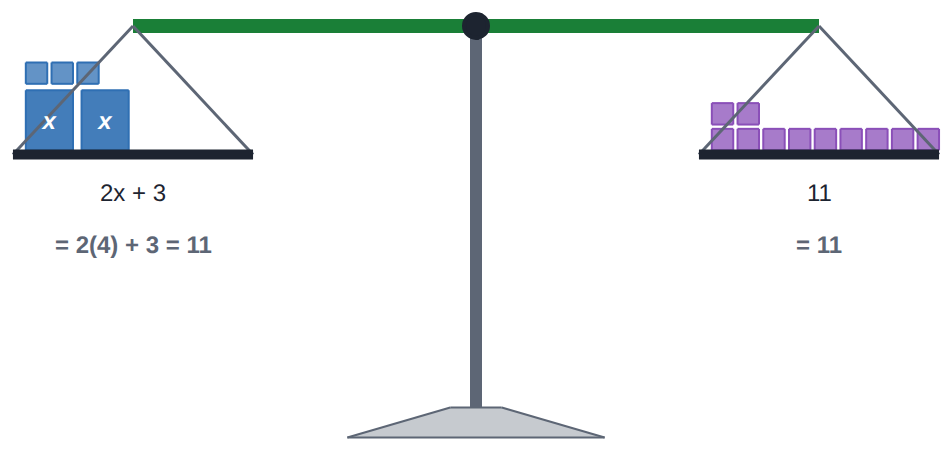
Put the value in place of the letter and work out both sides. If they match, it is a solution. Check every answer in the first equation.
Do the same to both sides (take away, or share into equal groups) until is on its own.