complementary events
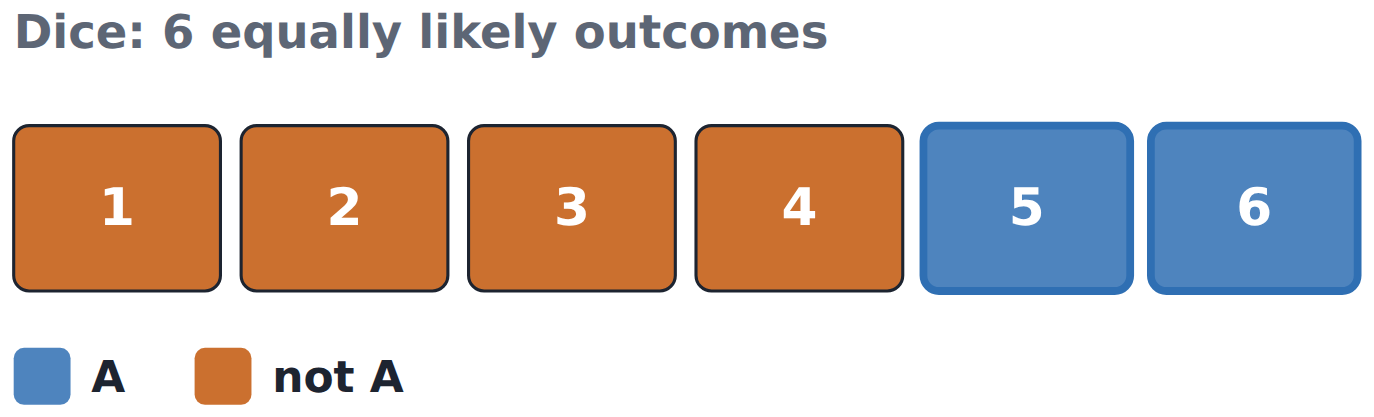
An event and its complement cover every outcome once. For 'at least one', count the outcomes with none and subtract from 1.
Year 8 Probability · The words and methods from the lessons, with an example of each.
An event and its complement cover every outcome once. For 'at least one', count the outcomes with none and subtract from 1.
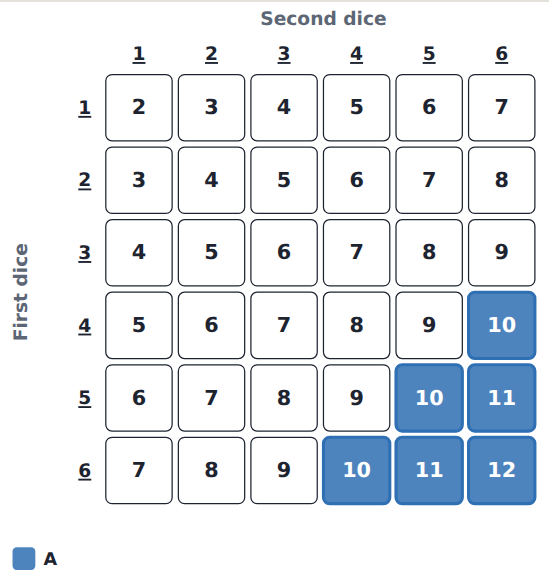
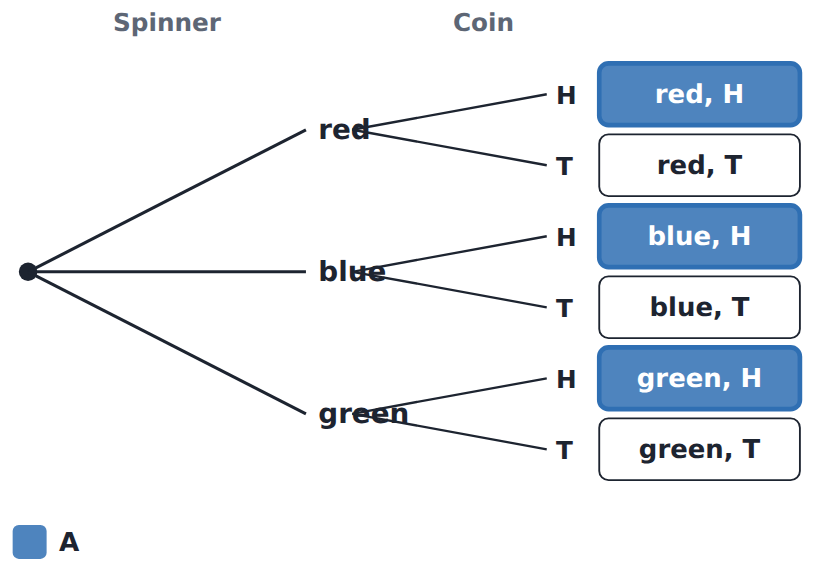
Two events make pairs: a grid or a tree lists every pair once, and the number of outcomes is the two counts multiplied. HT and TH are different outcomes.
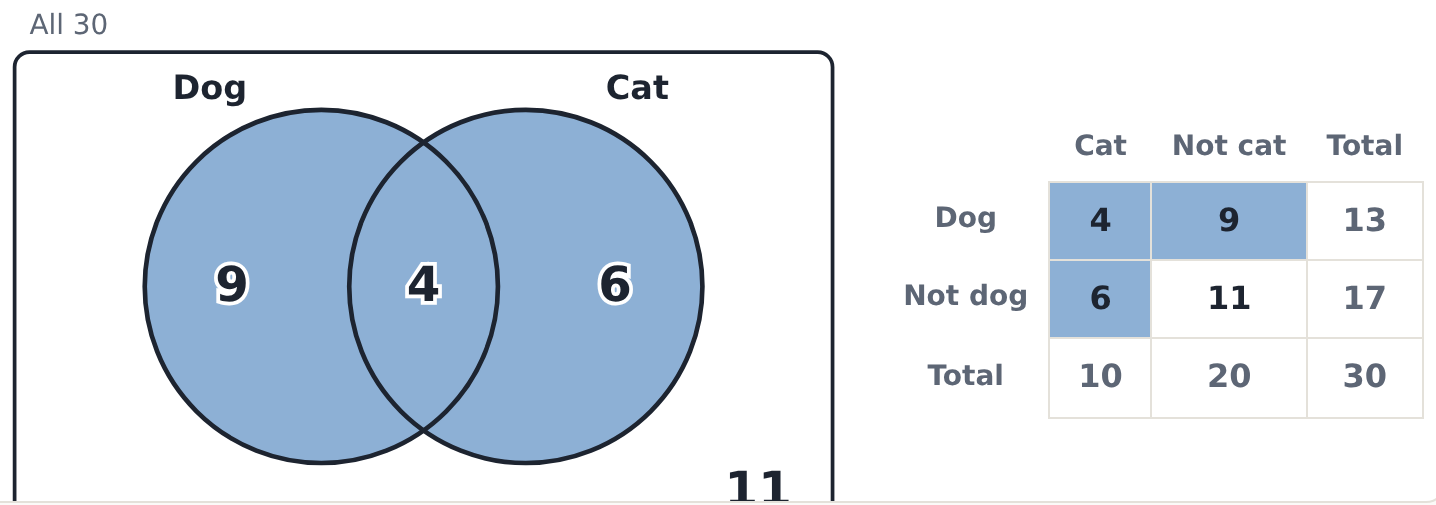
Two yes/no properties make four groups: one only, both, the other only, neither. Each is a region of the Venn diagram and a cell of the table.
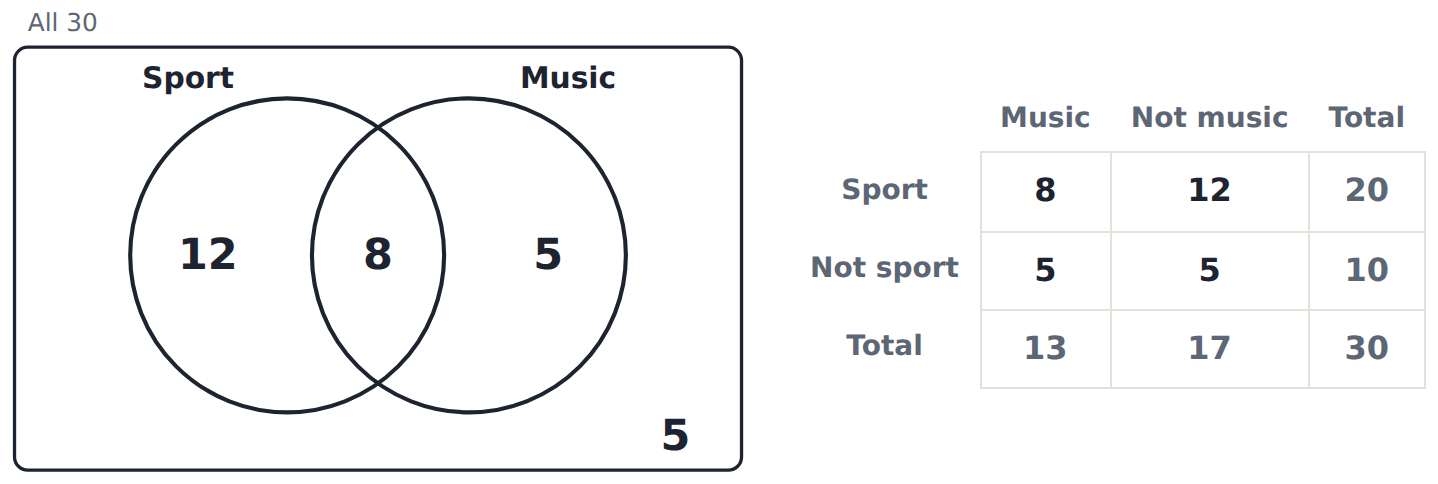
And is the overlap; or is one, the other or both; not A is everything outside A. Count each outcome once.
Run many trials with random numbers (=RANDBETWEEN(1,6) is a dice) and compare the relative frequency with the probability. Short runs can be well off.