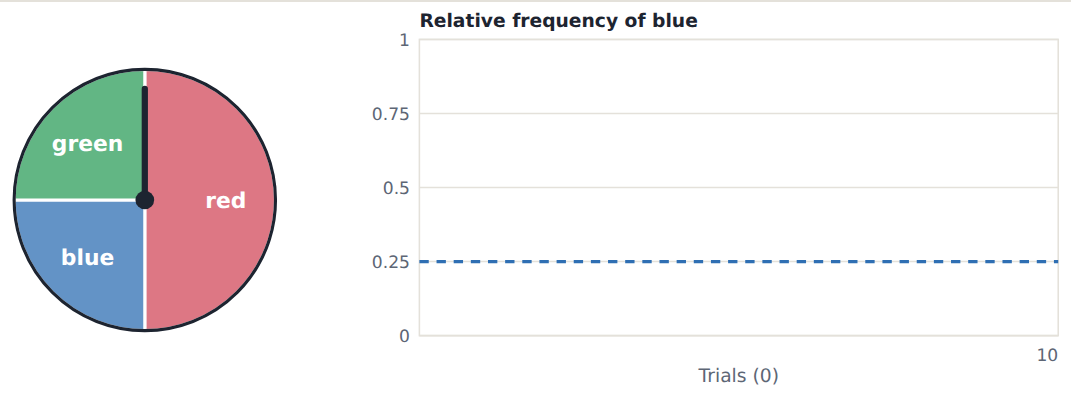
sample space
Every possible outcome, listed once. Check whether the outcomes are equally likely.
Year 7 Probability · The words and methods from the lessons, with an example of each.
Every possible outcome, listed once. Check whether the outcomes are equally likely.
Expected count = probability × trials. Real results vary around it, more so in short experiments.
The experiment's estimate of the probability. Over many trials it settles close to the probability (the law of large numbers); nothing is ever 'due'.
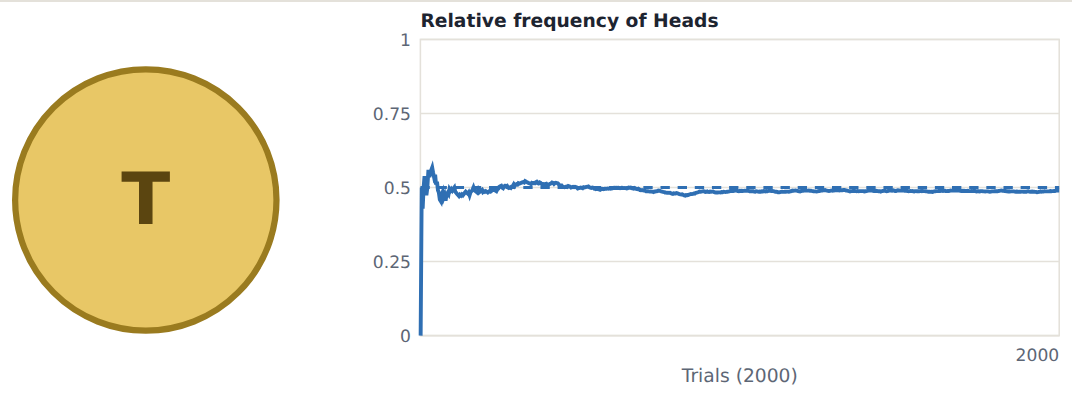
For equally likely outcomes. Otherwise use sizes or counts. From 0 (impossible) to 1 (certain); all outcomes add to 1.