← Judging and persuading

Judging and persuading: recap

For after the lessons: one card per lesson, to check what you remember. Answer each question in your head or on paper first, then check it. Nothing here is marked.

Warm-up: fact, opinion and evidence

1. Fact or feeling?

Try firstGive one fact and one opinion about your school canteen.

Check your answer

Any checkable sentence (it opens at 10 am) and any view (the food is great).

A fact can be checked. An opinion shows what someone thinks or feels.

Thinking verbs and emotive words give an opinion away.
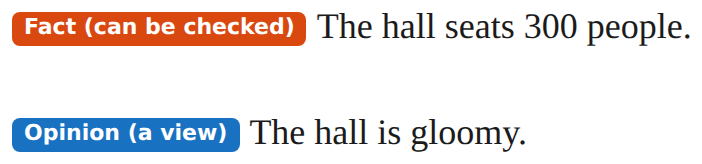
One school fair, two sentences. One can be checked and one shows what the writer feels.
Open the lesson →

2. Claims and how sure

Try firstName one word that softens a claim and one thing that backs one up.

Check your answer

Soften: may, might, some or often. Back up: a count, a survey or a named source.

A bare assertion has nothing behind it. A writer can back a claim up and soften it to fit the evidence.

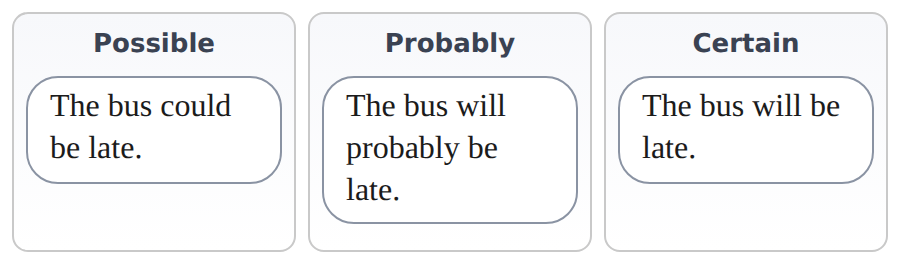
Small words show how sure the writer is.

Words that say how sure the writer is. A reader can tell a guess from a promise.
Open the lesson →

3. Who says so?

Try firstName two questions to ask about a source.

Check your answer

Who is it, so I could check? Do they know about this topic?

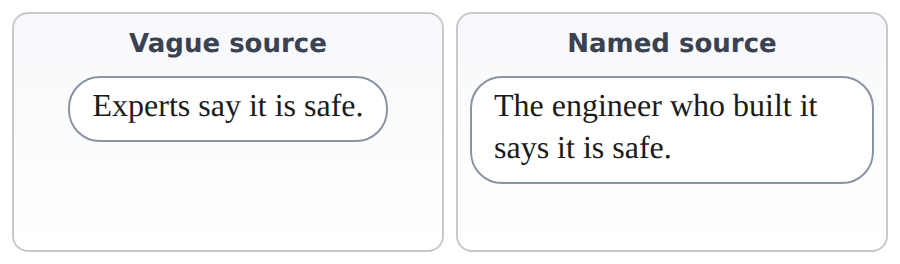
A named source who knows the topic persuades more than 'someone says'.

Ask who it is, and whether they know about this claim.

A named source who knows the topic is stronger than 'someone says'.
Open the lesson →

Words that nudge

4. Words that push a feeling

Try firstGive one praising word and one criticising word for a school hall.

Check your answer

Any pair, such as bright and gloomy.

Reporting words describe. Emotive words push a feeling and steer the reader.

A writer's word choice positions the reader for or against.

A park and a car park. One pair of words praises and the other criticises.
Open the lesson →

5. Spot the bias

Try firstWhy can a text with only true facts still be biased?

Check your answer

Because the words around the facts can favour one side.

Bias is word choice that favours one side.

A text can name both sides and still lean. Ask which words favour whom.

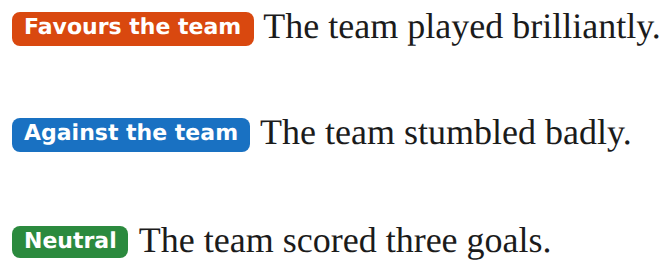
The same match, worded three ways. Each wording leans differently.
Open the lesson →

6. Judging and backing it up

Try firstGive a judgement and a detail that backs it up.

Check your answer

Any pair where the detail shows what the judgement says.

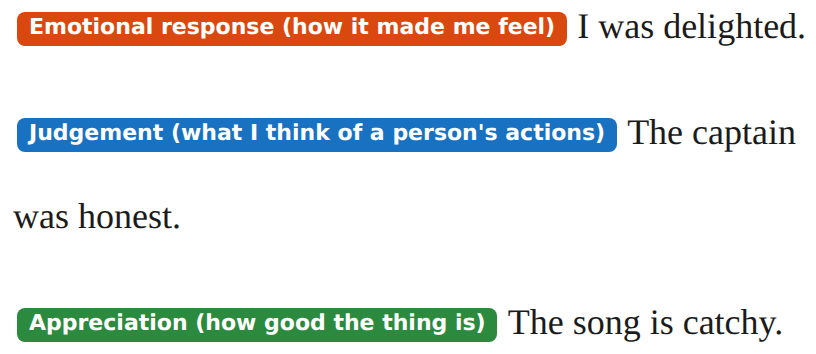
Evaluative words come in three kinds: emotional response (feelings), judgement (views of people) and appreciation (views of the thing).

A judgement is stronger when a detail or a trusted source backs it up.

Three kinds of evaluative word: a feeling, a person and a thing. A judgement backed by a detail is stronger.
Open the lesson →

7. Features that shape meaning

Try firstName one feature and what it does.

Check your answer

E.g. a question expecting a yes nudges the reader to agree.

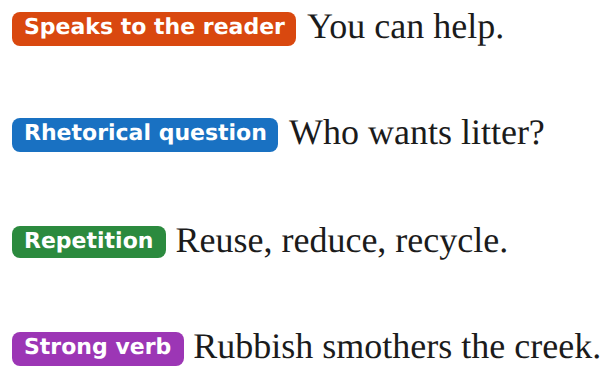
Writers choose language features on purpose. Each shapes what the reader feels or remembers.

The audience and purpose explain which features a writer picks.

Four features on one poster. Each does a different job.
Open the lesson →

8. Layers of meaning

Try firstName the device in 'Short walk,' said the guide, pointing at a three-day trek.

Check your answer

Understatement: it plays the trek down.

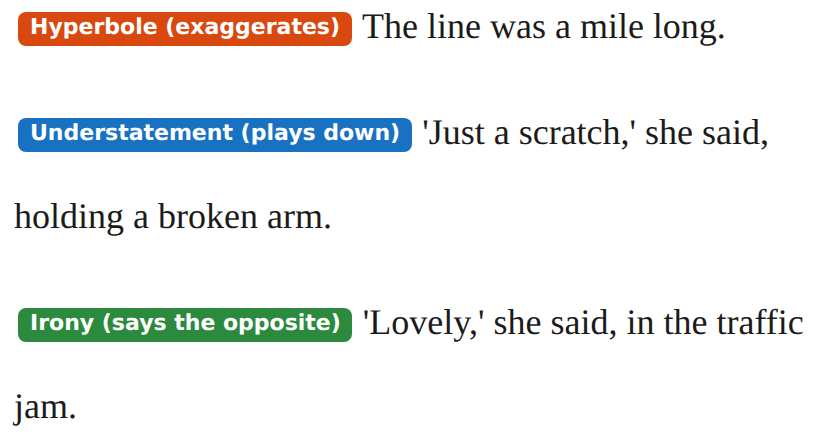
Irony says the opposite, hyperbole exaggerates and understatement plays down.

The gap between the words and the meaning is the extra layer.

Three devices. Each one says one thing and means another.
Open the lesson →

Challenge: judge the review

9. Challenge: judge the review

Try firstGive one part of the review that works for parents and one that is weak, with a reason for each.

Check your answer

E.g. the named critic works because parents can trust a critic; 'everyone knows' is weak because nothing backs it.

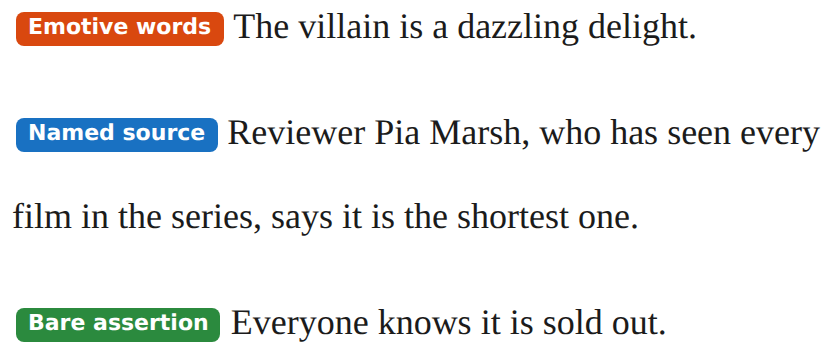
Judge a text by what each part does for its audience and purpose.

A source supports a claim when it saw or knows the thing the claim is about.

A review has parts. Judge each part for its audience and purpose.
Open the lesson →