B. Trained pattern detector
Open project
Build a Python app that recognises your own groups of pictures, body poses or sounds, using a model you train yourself, then responds in a way that helps someone.
Some things are easy for people to recognise but almost impossible to describe as rules. Every breed of dog, every angle and every kind of light would need its own rule. Instead you show the computer lots of examples of each group (a class), it finds its own patterns, and then it uses them on things it has never seen. Its confidence in an answer, a number from 0 to 1 (0.8 means 80% sure), is not the same as being right.
Before you start, write one sentence: who is it for, and what will it tell or do for them?
What to hand in
- Your app: the
.pyfile and your model file. - A testing record: input, what you expected, what the app said and how sure it was. Include at least five inputs it had not seen before, and at least two that are not in any of your classes.
- A reflection: what fooled it, what you changed because of it (more examples, a new class, a different cut-off), one thing a simple rule would do better than your model and why, and who could be affected if your app got it wrong.
Check your app before you hand it in
- Clear result, in words your user understands.
- Honest about how sure it is: it says when it is not sure instead of guessing.
- Useful response: advice, a next step or a score, not just a label.
- Fits your user: at least one setting or option they can change.
- Tested on things you did not train it on.
Good habits. Only record yourself, or people who have said yes. Check what is behind you before you record. Your pictures and sounds stay on your computer. The model file holds only your class names and trained numbers, but a saved project file also holds tiny copies of your photos (in Sounds mode, just sound scores), so do not share it if it shows people.
Ways it could look when it works
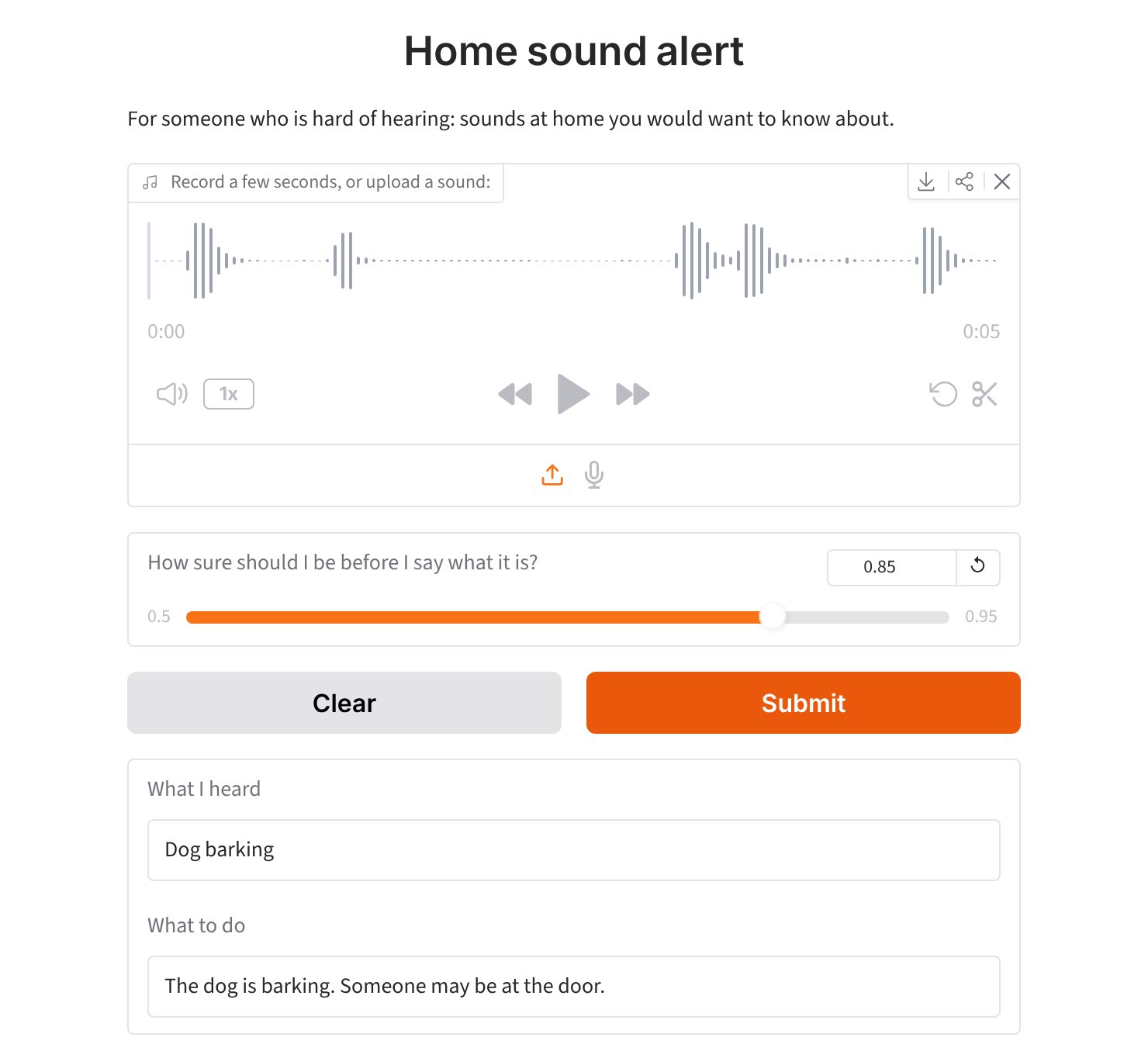
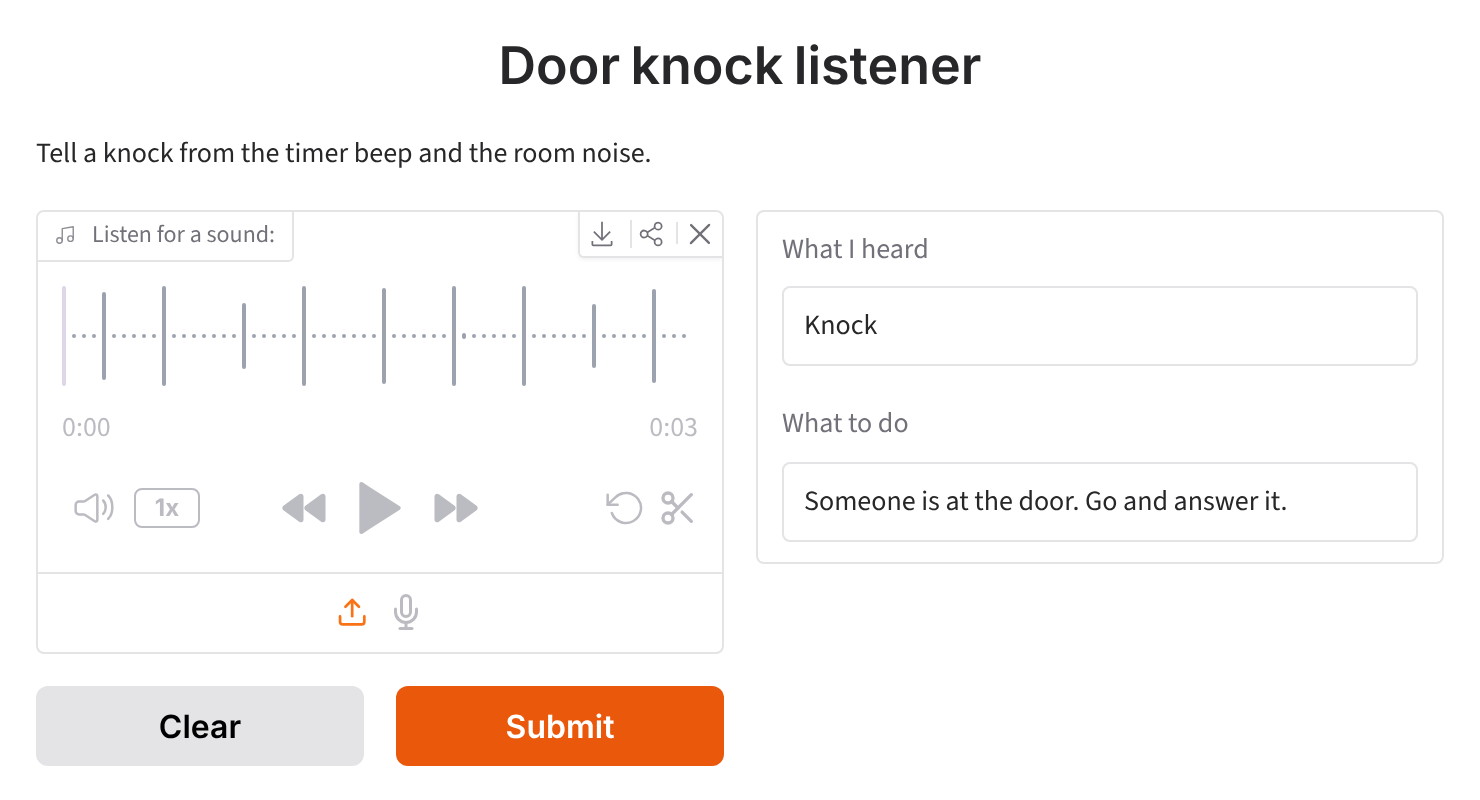
These show a finished project at about the level to aim for. Yours will be different, and that is fine.
You'll use
These light up when code you paste uses them. The starters already use some of them, so check the parts you wrote use them too. Click one to see where you learned it.
Where you'll work
This project runs on your own computer, not in this page.
- Pattern Trainer · collect examples, train, check, and download your model file
- The Pattern Trainer guide · collecting examples, training and checking, step by step
- Set up the starters (once per computer) · Python 3, then one install
- image_pattern_trainer.py · your classes are things in pictures
- pose_pattern_trainer.py · your classes are body poses
- audio_pattern_trainer.py · your classes are sounds
Optional: paste your code to light up the skills it uses
Nothing is sent anywhere. It stays in this browser, and Download my code saves it.Milestones
Tick each one when it is true of your project. Nobody marks it: be honest with yourself.
- One way to do this step (yours can differ):
# Plan (written before training): # User: someone hard of hearing, at home. # Job: tell them about sounds they would want to know about. # Classes: Baby crying, Dog barking, Fire crackling, Nothing urgent - One way to do this step (yours can differ):
# I tried I expected It said How sure # a sneeze Nothing urgent Baby crying 0.61 (now "Not sure") # a rooster Nothing urgent Dog barking 0.998 (fooled, and sure) # a chainsaw, first model Nothing urgent Fire crackling 1.00 (fixed by adding chainsaws) - One way to do this step (yours can differ):
ADVICE = { "Baby crying": "The baby is crying. Go and check on them.", "Dog barking": "The dog is barking. Someone may be at the door.", "Fire crackling": "Something is crackling like a fire. Check the kitchen and the heaters now.", "Nothing urgent": "Nothing to worry about.", } - One way to do this step (yours can differ):
if score < cutoff:
    # Not sure is passed on, not dropped: a missed alert costs more than a false one.
    return "Not sure", f"I heard something, maybe {label} ({score:.0%}). Have a look to be safe."
return label, ADVICE[label]
Make it yours
- Add a second setting your user can change, such as how many examples must agree, and test both settings.
- Retrain with the examples that fooled it, and show in your testing record that the same inputs now work.
- Ask someone who was not in your training examples to try it, and add what happens to your testing record.
- Check the trainer's privacy claim yourself. Load it, then turn off Wi-Fi and train a model: if it still works, the work is happening on your computer. Or open your browser's developer tools (F12), click Network, clear it, then add examples and train, and see what appears.
- Optional: train a first model on a public dataset (your teacher has links to some), then test it on examples you collect yourself. What changes when it meets your room, your camera or your voice?
- Ideas to start from: a recycling helper, a plant health check, a hand-sign counter, a squat or plank coach, a gesture remote, a clap or knock command, an instrument identifier, or a doorbell, kettle and microwave listener.
Looking back
Tick every milestone first.
★ B. Trained pattern detector
You built it with: