C. Combined pattern detector
Open project
Build a Python app where a trained model recognises something, and rules you write decide what to do about it.
Each part does the job it is best at. The model handles the messy, real-world input, such as a photo, a pose or a sound. The rules handle the parts you can describe exactly: counting, scoring, looking things up, and deciding what to do when the model is not sure.
Before you start: you have built one rules-based app (project A) and one trained app (project B).
The parts fit together like this:
input → trained model → label + how sure → your rules → response
Your rules should use how sure the model is, not only its label. What does your app do when it is not sure?
Before you start, write one sentence: who is it for, and what will it tell or do for them?
What to hand in
- Your app: the
.pyfile, your model file and any data files. - A pipeline diagram, with the reason each part is a model or rules.
- A testing record for each part on its own and for the whole app, including inputs where the model was unsure or wrong.
- A reflection: which part caused the most problems, what you would change, and who could be affected if your app got it wrong.
Check your app before you hand it in
- Clear result, in words your user understands.
- Honest about how sure it is: low-confidence results are handled, not hidden.
- Useful response that needs both parts: take either part away and the response gets worse.
- Fits your user: settings or options they can change.
- Tested as a whole, not just part by part.
Good habits. Only record yourself, or people who have said yes. Check what is behind you before you record. Your pictures and sounds stay on your computer.
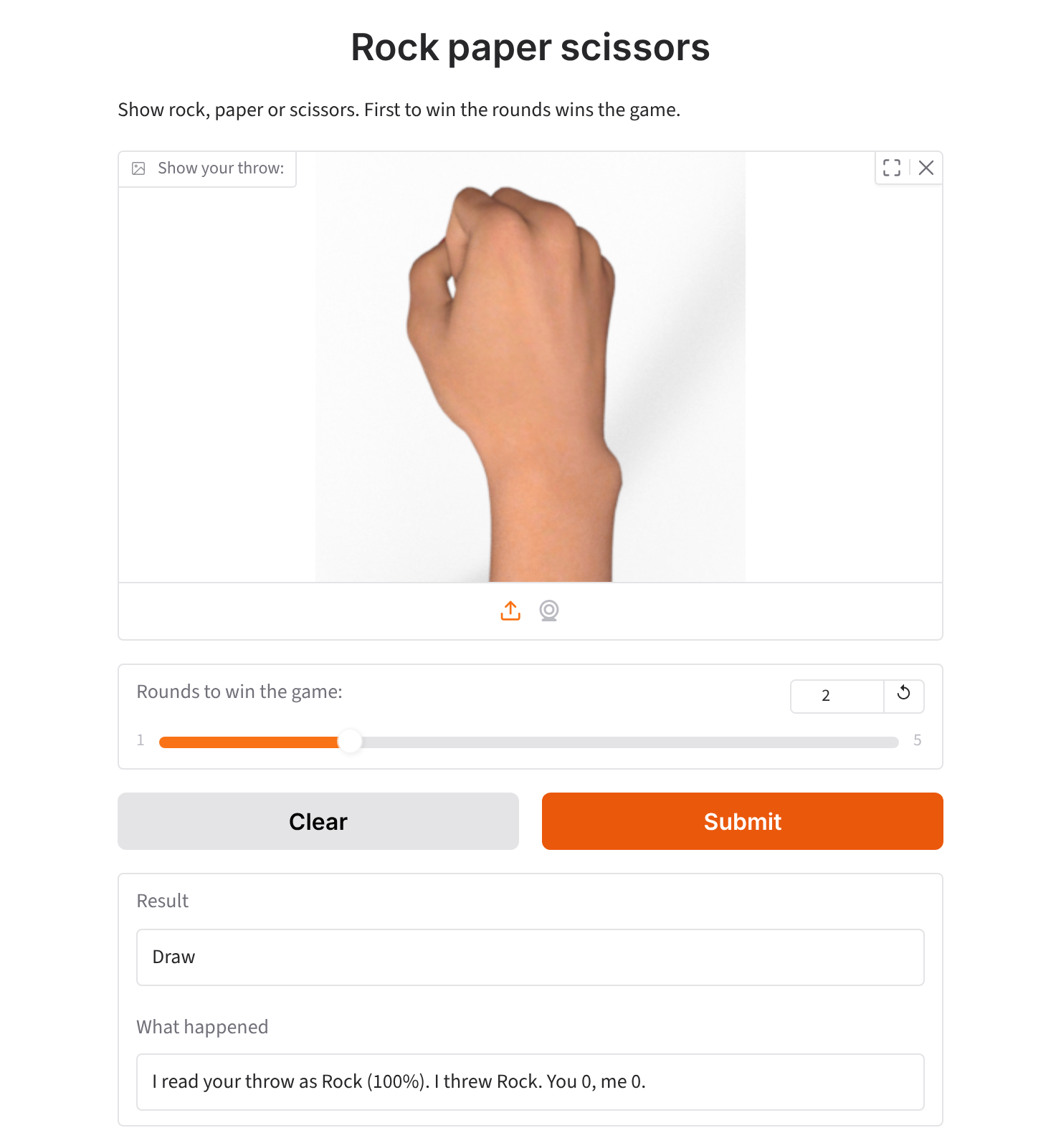
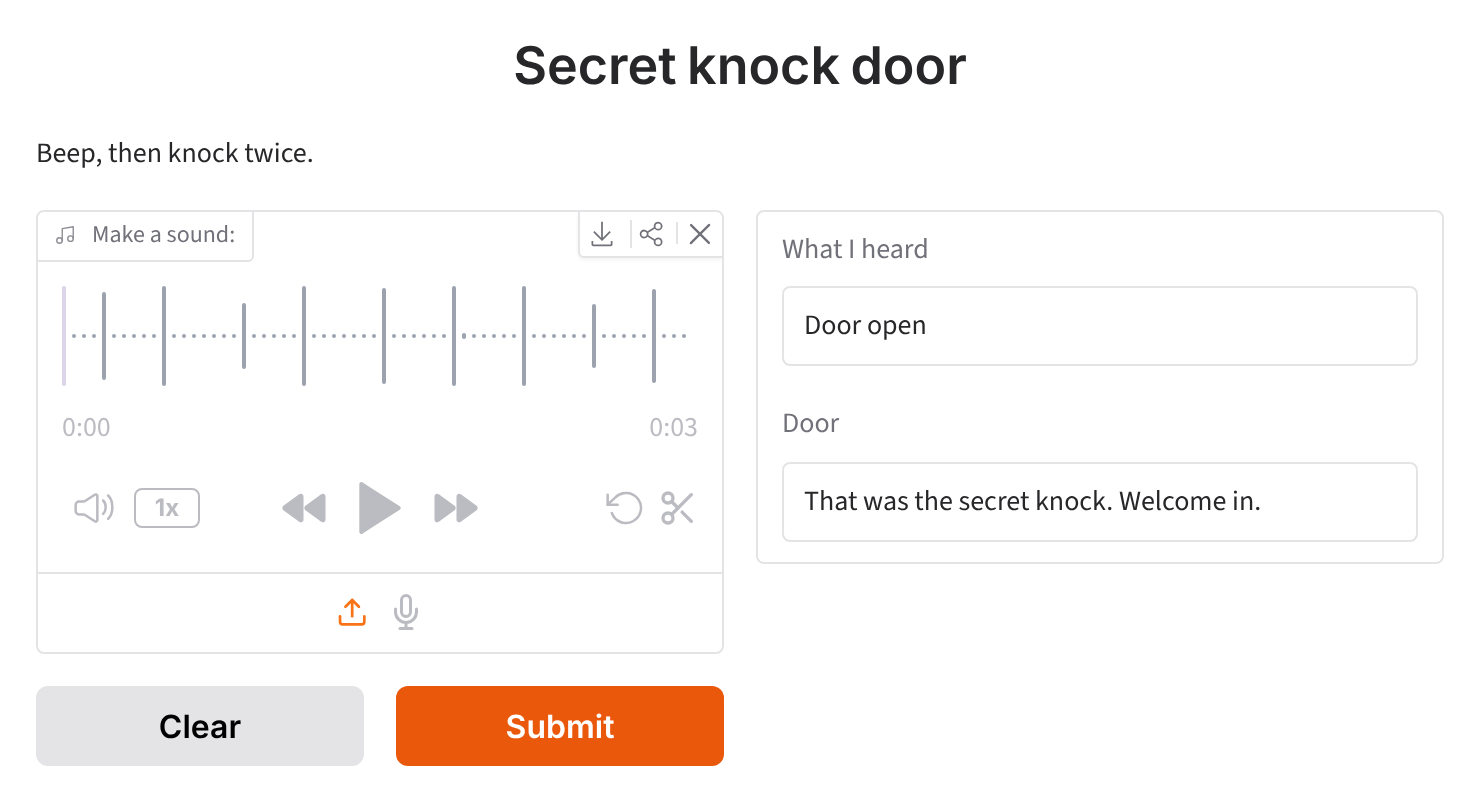
Ways it could look when it works
These show a finished project at about the level to aim for. Yours will be different, and that is fine.
You'll use
These light up when code you paste uses them. The starters already use some of them, so check the parts you wrote use them too. Click one to see where you learned it.
Where you'll work
This project runs on your own computer, not in this page.
- Pattern Trainer · collect examples, train, check, and download your model file
- The Pattern Trainer guide · collecting examples, training and checking, step by step
- Set up the starters (once per computer) · Python 3, then one install
- image_pattern_trainer.py · the model part, for pictures
- pose_pattern_trainer.py · the model part, for body poses
- audio_pattern_trainer.py · the model part, for sounds
- choice_rules.py · a rules part: numbers and choices
- sound_rules.py · a rules part for sound: loudness and which note it is (uses measure.py)
Optional: paste your code to light up the skills it uses
Nothing is sent anywhere. It stays in this browser, and Download my code saves it.Milestones
Tick each one when it is true of your project. Nobody marks it: be honest with yourself.
- One way to do this step (yours can differ):
# Pipeline: # photo -> MODEL (Rock/Paper/Scissors + how sure) -> RULES (cut-off, who wins, score) -> result # MODEL: telling a hand shape apart in a photo is too messy for rules. # RULES: who beats whom, keeping score and when the game ends are exact. - One way to do this step (yours can differ):
assert run([("Rock", 0.95, "Scissors")]) == ({"you": 1, "computer": 0}, "You win the round") assert run([("Rock", 0.95, "Paper")]) == ({"you": 0, "computer": 1}, "I win the round") assert run([("Rock", 0.95, "Rock")]) == (NEW_GAME, "Draw") assert run([("Paper", 0.65, "Rock")]) == (NEW_GAME, "Show it again") # unsure: not played - One way to do this step (yours can differ):
label, confidence = model.top(image) # the MODEL part computer = random.choice(list(BEATS)) score, headline, detail = play(score, label, confidence, computer, int(target)) # the RULES part - One way to do this step (yours can differ):
if label is None or confidence < CUTOFF:
    return score, "Show it again", f"I'm not sure that was {label} ({confidence:.0%}), so that throw doesn't count."
Make it yours
- Add a second setting your user can change, and test both settings across a whole run of inputs.
- Make your rules less trusting: act on an answer only after it has repeated, and show in your testing record that one wrong answer no longer changes the result.
- Swap the model part for a different mode (poses, pictures or sounds) and keep the rules, and note what you had to change.
- Use two models in a row: a ready-made object detector finds each thing in the photo (a banana, a cup, a dog), and your own model judges each cut-out (ripe or not). Test where the join fails: what does your model say about something the detector got wrong, or missed?
- Optional: train your model on a public dataset (your teacher has links), then test the whole app on examples you collect yourself.
- Ideas to start from: a recipe helper, a singing or playing coach, a language revision game, a workout timer that counts only good form, or a local recycling guide.
Looking back
Tick every milestone first.
★ C. Combined pattern detector
You built it with: